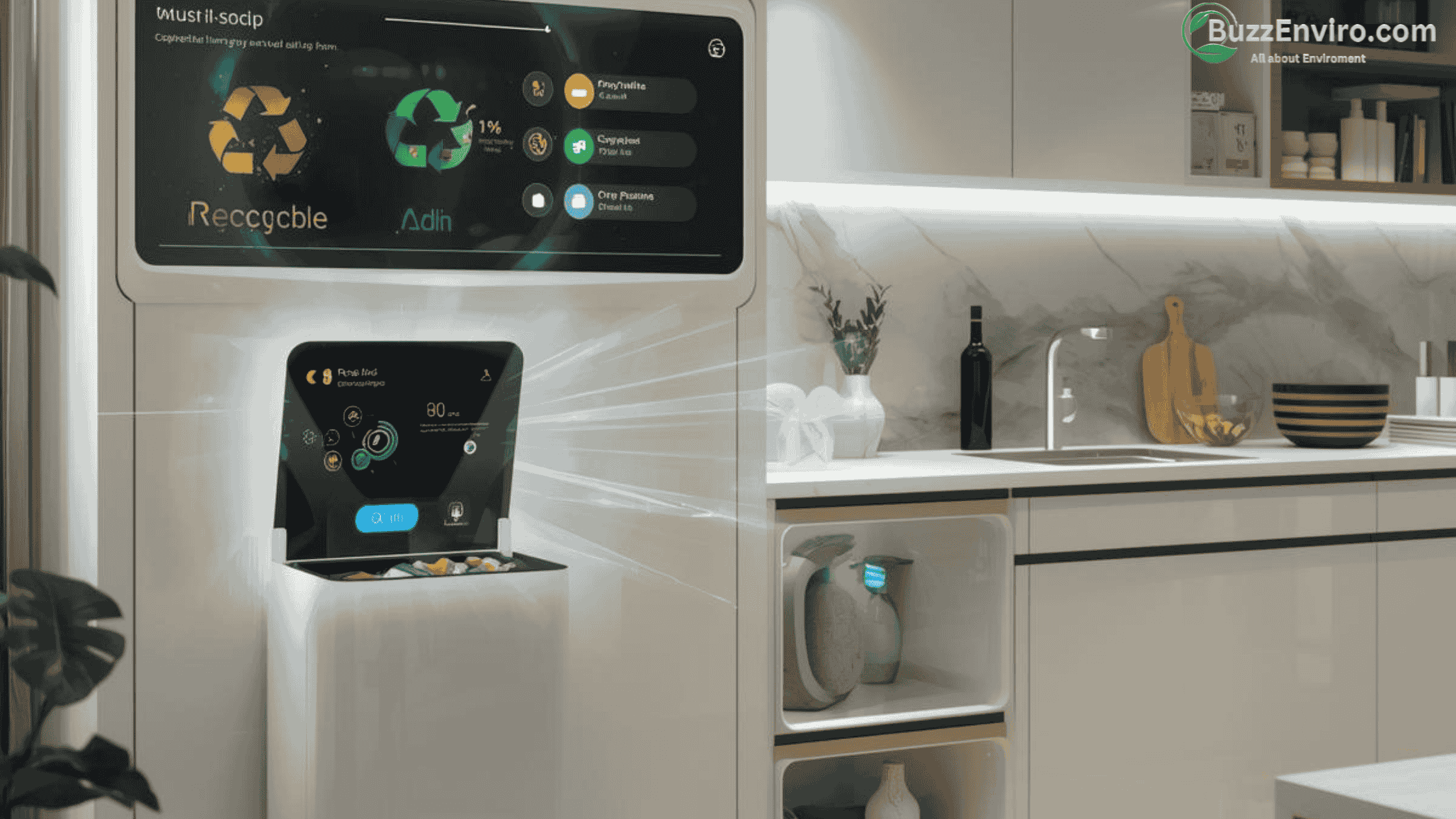
In 2026, the humble kitchen trash can is undergoing a high-tech metamorphosis. As global waste volumes continue to climb and recycling regulations become increasingly stringent, the emergence of AI waste sorting at the residential level is promising to solve a decades-old problem: the “wish-cycling” dilemma.
We’ve all been there—hovering over a bin with a greasy pizza box, wondering if it belongs in the blue bin or the black one. According to the United Nations Environment Programme (UNEP), 67% of consumers now prefer sustainable waste disposal methods, yet contamination remains the biggest barrier to a true circular economy.
📑 Table of Contents
- 1. AI Waste Sorting: Is It the Future of Home Recycling?
- 2. What is AI Waste Sorting? (The Tech Behind the Bin)
- 3. The “Wish-Cycling” Solution: Why Home AI Matters
- 4. Smart Bins vs. Industrial Sorting Plants
- 5. Barriers to Entry: The Challenges of 2026
- 6. The Future: Toward a “Zero-Waste” Household
- 7. Conclusion: Is the Future Here?
- 8. Frequently Asked Questions (FAQ)
What is AI Waste Sorting? (The Tech Behind the Bin)
At its core, AI waste sorting uses a combination of computer vision, machine learning, and IoT (Internet of Things) sensors to identify and categorize refuse in real-time.
Unlike traditional mechanical sorting, AI systems use Convolutional Neural Networks (CNNs) trained on millions of images. These systems can recognize specific brands, material textures, and even the chemical composition of an item using Near-Infrared (NIR) sensors to distinguish between food-grade and non-food plastics.
The “Wish-Cycling” Solution: Why Home AI Matters
The primary driver for home-based AI sorting is the reduction of recycling contamination. In 2026, the “Circular Economy” isn’t just a buzzword; it’s a legal framework.
Key Benefits of Home AI Sorting:
- Precision at the Source: AI prevents clean paper from being ruined by leftover liquids. Companies like CleanRobotics have pioneered systems that achieve over 90% accuracy in sorting at the source.
- Instant Education: Many smart bins feature displays that explain why an item isn’t recyclable, helping users learn over time.
- Optimized Collection: Integrated IoT sensors track bin fill levels. This data helps municipalities use predictive routing to slash carbon emissions from garbage trucks.
Smart Bins vs. Industrial Sorting Plants
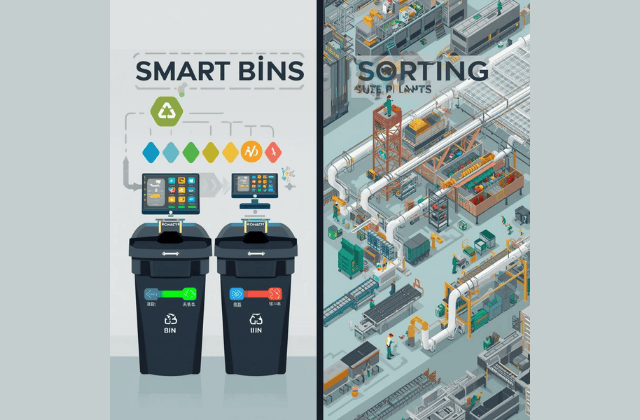
While massive Material Recovery Facilities (MRFs) already use AI-powered robotic arms that can make over 160 “picks” per minute, bringing this technology into the home represents the next frontier. Pioneers in this space, such as AMP, have shown that AI-powered mechanisms can classify waste 4-5 times faster than manual sorting.
| Feature | Industrial AI Sorting | Home AI Smart Bins |
| Scale | High-volume (60,000+ tons) | Residential/Low-volume |
| Technology | Massive robotic arms & conveyor belts | Compact sensors & automated lids |
| Primary Goal | Material recovery for resale | Contamination reduction & logistics |
| User Interaction | None | High (Educational feedback) |
Barriers to Entry: The Challenges of 2026
Despite the “cool factor” seen at events like CES 2026, there are significant hurdles to widespread adoption:
- High Initial Investment: A standard kitchen bin costs $20; a high-end AI-powered smart bin can range from **$500 to $1,500**.
- Privacy Concerns: Some consumers are wary of “always-on” cameras. Modern systems address this using GDPR-compliant data anonymization to ensure photos of trash don’t compromise personal privacy.
- Maintenance: Cameras in a dirty environment require regular cleaning and software updates as packaging designs change.
The Future: Toward a “Zero-Waste” Household
The ultimate goal of AI waste sorting isn’t just to sort trash—it’s to eliminate it. Startups like Mill are already turning food scraps into chicken feed, while others are developing blockchain-linked bins that reward users with “green credits” for high recycling purity rates.
Looking forward, the Global AI Waste Sorting Market is projected to reach nearly $3 billion by late 2026, signaling that this tech is here to stay.
Conclusion: Is the Future Here?
While we are not yet at the point where every home has a robot butler sorting its trash, AI waste sorting has moved from “science fiction” to “operational necessity.” For the eco-conscious homeowner of 2026, these smart systems offer a way to ensure their sustainability efforts actually make a difference.
Also Read:- Waste Management in India: Challenges, Solutions & the Way Forward
❓ Frequently Asked Questions
1. Can AI bins distinguish between different types of plastic?
Yes. Advanced systems can distinguish between PET, HDPE, and PP plastics, which is crucial for high-quality recycling.
2. Are these bins available for purchase today?
Yes, several companies now offer residential models, though they are currently targeted at “prosumer” households and tech-savvy eco-enthusiasts.
3. Do AI bins help with compost?
Absolutely. Many smart bins are designed specifically to detect organic waste and divert it from landfills to prevent methane emissions.