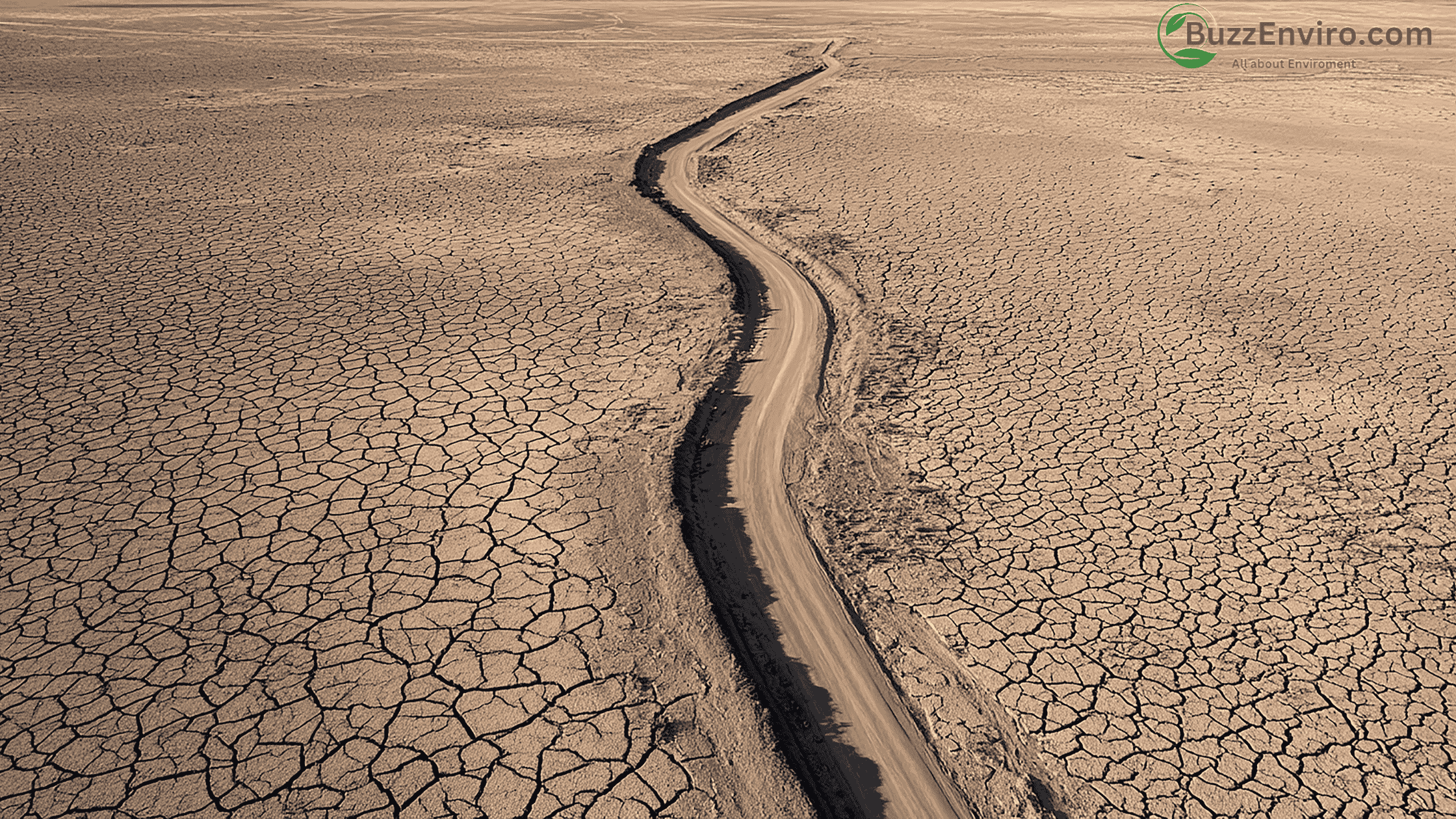
For decades, the world was warned of a looming “water crisis.” But as of January 2026, that terminology has been officially retired by the highest levels of global governance. In a landmark report titled Global Water Bankruptcy: Living Beyond Our Hydrological Means in the Post-Crisis Era, the United Nations University (UNU-INWEH) has declared that we have entered a state of Global Water Bankruptcy.
This isn’t just a drought. It is a fundamental shift in how the planet’s life-support systems function.
What is Water Bankruptcy? (The 2026 Scientific Definition)
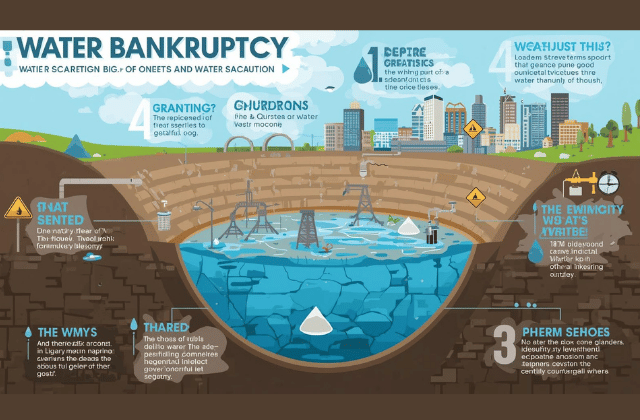
As of January 2026, the term “Water Bankruptcy” has officially replaced “water crisis” in global scientific and policy circles. It describes a state of hydrological insolvency, where a region has permanently depleted its water “savings” (aquifers, glaciers, and wetlands) and can no longer return to historical levels of water availability.
The term was formally defined in a landmark report titled Global Water Bankruptcy: Living Beyond Our Hydrological Means in the Post-Crisis Era, released by the United Nations University (UNU-INWEH) on January 20, 2026.
Why it’s different from a “Crisis”
The UN scientists, led by Kaveh Madani, argue that “crisis” suggests a temporary emergency that can be fixed. Bankruptcy, however, is defined by two key factors:
- Insolvency: We are withdrawing water faster than the H2O cycle can resupply it.
- Irreversibility: The natural infrastructure—like underground aquifers—has physically collapsed (land subsidence) or vanished (glacier melt), meaning the “storage space” is gone forever.
My Experience in January 2026: I’ve spent the last week monitoring the Dakar High-Level Meetings (Jan 26-27), where world leaders are scrambling to prepare for the upcoming UN Water Conference. The mood is no longer about “saving water”; it’s about restructuring hydrological debt.
1. The Liquidated “Savings Accounts” of Earth
To understand bankruptcy, we must look at where our “savings” have gone. The UN report highlights four major areas of “Capital Liquidation”:
A. The Erasure of Wetlands (The World’s Filters)
Over the last 50 years, humanity has erased 410 million hectares of natural wetlands—an area equivalent to the entire European Union. This includes 177 million hectares of inland marshes and swamps. The loss of ecosystem services from these “sponges” is valued at $5.1 trillion annually—a sum larger than the GDP of 135 countries combined.
B. Surface Water and Lake Decline
More than 50% of the world’s large lakes have lost significant volume since the early 1990s. This isn’t just a loss of beauty; it affects 2 billion people who depend on these basins for stability.
C. The Collapse of the Cryosphere
We have lost 30% of global glacier mass since 1970. In 2026, we are seeing “functional glacier loss” in several mountain ranges, removing the critical long-term buffer that feeds our major rivers during the dry season.
D. Groundwater Depletion & Land Subsidence
This is the most “silent” part of the bankruptcy. Around 70% of major aquifers are in long-term decline. This has led to land subsidence (sinking ground) over 6 million square kilometers (5% of global land area).
- Mexico City: Sinking by 21 cm/year.
- Tulare, USA: Sinking by 28 cm/year.
- Rafsanjan, Iran: Sinking by 30 cm/year.
3. Hotspots of Insolvency: From Tehran to London
While 75% of the world lives in water-insecure countries, certain hotspots are currently hitting “Day Zero”:
- Tehran, Iran: In December 2025, the President warned that the capital might need to be evacuated or relocated if rainfall does not return.
- Turkey: The Konya plain is now peppered with over 700 sinkholes, some 100 feet deep, where the earth has literally collapsed into empty aquifers.
- United Kingdom: Even London has been classified in 2026 as experiencing “extremely high water stress,” with the Environment Agency projecting a 5-billion-liter-a-day shortfall by 2055.
4. The AI Factor: The Digital Thirst
A new driver of bankruptcy in 2026 is the power and cooling requirements of the AI boom. Large-scale data centers are consuming billions of gallons of local water. In the “post-crisis” world, we must now choose between processing power and potable water.
Starting Fresh From Zero
Declaring bankruptcy is not about giving up; it is about an honest accounting of what is left. As Kaveh Madani stated this week, “The longer we delay the audit, the deeper the deficit grows.”
To survive the era of Global Water Bankruptcy, we must transform our relationship with water from a commodity to be exploited to a precious capital asset to be guarded.
Your Next Step: If you are an investor or homeowner, check the 2026 Land Subsidence Maps for your area. Protecting your property and your community starts with acknowledging the reality beneath your feet.