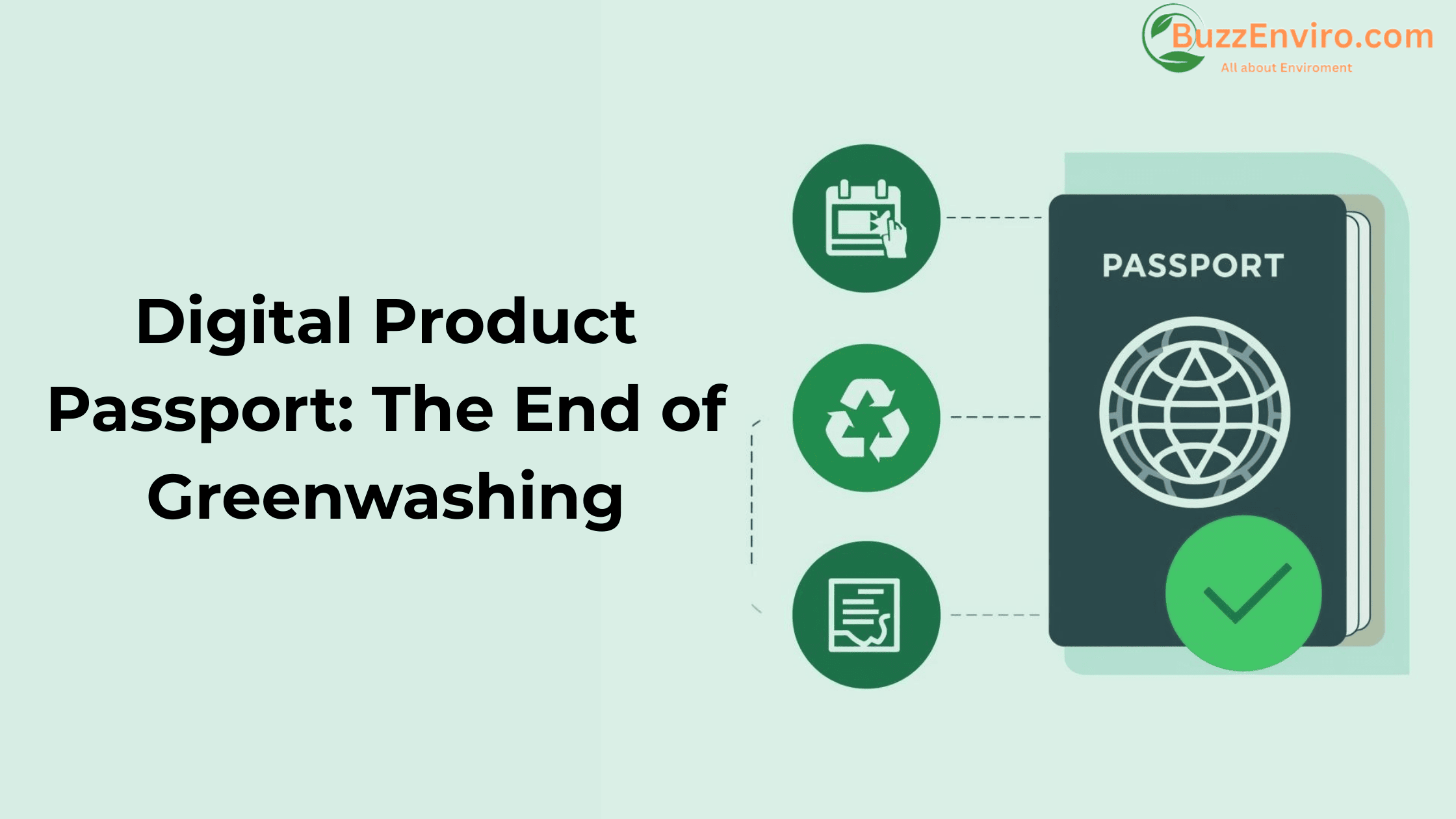
Sustainability has long suffered from a “trust gap.” While 75% of products on shelves claim to be “eco-friendly” or “natural,” verifying those claims has historically been impossible for the average consumer. Enter the Digital Product Passport (DPP): a standardized, digital identity for physical goods that tracks every stage of a product’s lifecycle. By shifting from vague marketing narratives to immutable, data-backed evidence, the DPP is effectively signaling the end of the greenwashing era.
📑 Table of Contents
What is a Digital Product Passport (DPP)?
A Digital Product Passport is an electronic record that gathers and shares comprehensive data about a product throughout its entire value chain. Think of it as a “digital twin” or a “digital ID card” for a product. Accessible via a simple scan of a QR code or an NFC tag, it provides stakeholders—from factory workers to end consumers and recyclers—with verified information regarding a product’s origin, material composition, and environmental footprint.
Under the European Union’s Ecodesign for Sustainable Products Regulation (ESPR), the DPP is becoming a mandatory “license to operate” for brands entering the European market.
How DPPs Eliminate Greenwashing?
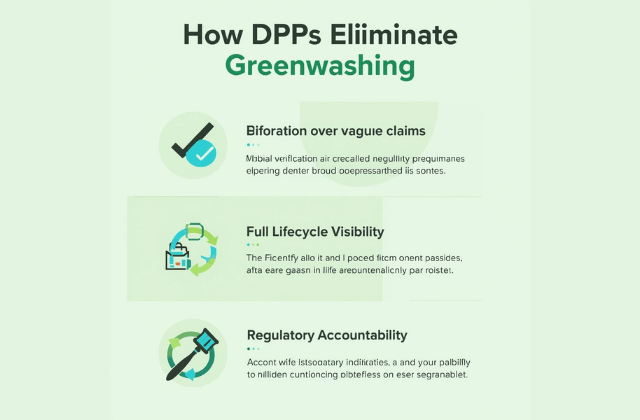
Greenwashing thrives in the “gray area” of subjective terminology. Terms like “responsibly sourced” or “circular” have lacked legal definitions, allowing brands to cherry-pick data. The DPP changes the power dynamic in three distinct ways:
1. Verification Over Vague Claims
Instead of a label that says “made with recycled materials,” a DPP identifies exactly what percentage of the product is recycled, the specific source of that material, and the carbon emissions generated during its transport.
2. Full Lifecycle Visibility
Greenwashing often focuses on one “good” aspect of a product while hiding the “bad.” A DPP requires disclosure on:
- Raw material extraction: Is the cobalt in this battery ethically mined?
- Repairability scores: How many years is this device expected to last?
- End-of-life instructions: Can this garment actually be recycled, or is it destined for a landfill?
3. Regulatory Accountability
In 2026, the Green Claims Directive and the DPP work in tandem. If a company’s digital passport contains fraudulent data, it faces significant legal penalties and trade restrictions, moving sustainability from “voluntary PR” to “mandatory compliance.”
Regulatory Landscape: The EU ESPR and Beyond
The rollout of the Digital Product Passport is not a suggestion—it is a phased legal requirement.
- 2026: Implementation of the Central DPP Registry. Steel and iron sectors begin technical integration.
- 2027: The EU Battery Regulation makes DPPs mandatory for industrial and electric vehicle (EV) batteries.
- 2028–2030: Expansion into high-impact sectors including textiles (fashion), furniture, and detergents.
Expert Insight: According to the European Commission, the goal is to make sustainable products the norm. By 2030, nearly all physical goods sold in the EU will require a digital “birth certificate.”
Industry Impact: Batteries, Textiles, and Electronics
| Industry | Primary DPP Goal | Key Data Point |
| Batteries | Circularity & Safety | Mineral origin and recycled content % |
| Textiles | Reducing Waste | Fiber composition and “Right to Repair” info |
| Electronics | E-waste Prevention | Disassembly instructions and spare part availability |
Case Study: The Battery Passport
The battery sector is the “bellwether” for this technology. As of 2026, EV manufacturers are utilizing blockchain-backed DPPs to prove that their lithium and cobalt sourcing complies with human rights standards. This ensures that the “green” transition to electric vehicles doesn’t come at a hidden social cost.
The Technology Behind the Passport
The “passport” itself isn’t a single document but an interoperable data structure. Most companies are adopting:
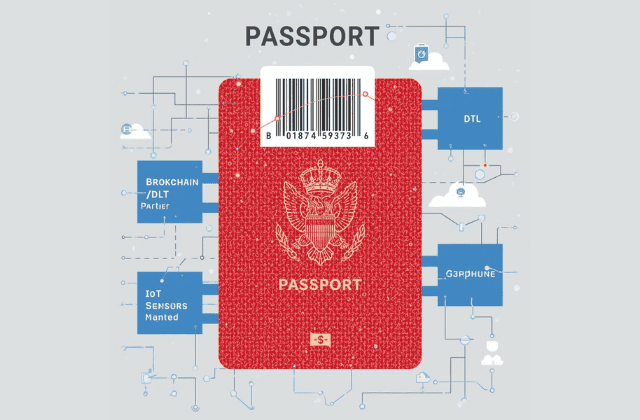
- 2D Barcodes (GS1 Digital Link): Replacing traditional barcodes with QR codes that link to a live URL.
- Blockchain/DLT: Ensuring the data is “immutable” (cannot be changed after the fact by the brand).
- IoT Sensors: For complex machinery, tracking real-time usage and wear-and-tear to predict when a part needs replacing.
Practical Takeaways for Businesses
For brands, the DPP is a challenge that doubles as a massive opportunity for topical authority and brand loyalty.
- Audit Your Supply Chain: You cannot report what you do not know. Map your Tier 2 and Tier 3 suppliers now.
- Adopt Open Standards: Use international standards like ISO/IEC 15459 to ensure your data is readable by regulators.
- Invest in “Data Liquidity”: Move away from static PDF audits. Your sustainability data must be dynamic and machine-readable.
- Communicate Transparency: Use your DPP as a marketing tool. Consumers in 2026 are increasingly choosing brands that allow them to “check it yourself.”
Future Outlook: Beyond Compliance
By 2030, the Digital Product Passport will likely integrate with Agentic AI. Imagine an AI assistant that scans a product for you and says: “This jacket has a high repairability score, but the carbon footprint of its transport is 20% higher than the alternative.” The DPP isn’t just about stopping greenwashing; it’s about creating a truly informed global marketplace.
Frequently Asked Questions
1. Will the Digital Product Passport make products more expensive?
While there is an initial investment in data infrastructure, the DPP reduces costs in the long run by optimizing supply chains, reducing waste, and facilitating the resale market.
2. Can consumers access the DPP today?
Many luxury brands and battery manufacturers have already launched pilot programs. By 2027, you will see scannable “passports” on most clothing and electronics in the EU.
3. Is the DPP only for European companies?
No. Any global brand selling products within the EU market must comply with these regulations, effectively making the DPP a global standard for transparency.