
The European eel (Anguilla anguilla) is an animal of superlatives. It travels over 6,000 km to spawn, can breathe through its skin to crawl across damp grass, and has survived for 70 million years. Yet, in 2026, this resilient traveler is facing a biological “bottleneck” that threatens its very existence.
The European eel decline is a continental crisis. Once the most common fish in European rivers—representing over 50% of total freshwater fish biomass—its population has plummeted by 95% to 99% since the 1980s.
Table of Contents
The ICES 2026 Mandate: The “Zero Catch” Era
For the year 2026, the scientific community has sent its clearest message yet. The International Council for the Exploration of the Sea (ICES) has issued formal advice that there should be zero catches of European eel in all habitats.
This “zero catch” advice for 2026 is revolutionary because it removes the “loophole” of restocking:
- The Restocking Controversy: Historically, glass eels were caught and moved to other rivers to “help” the population. ICES now states this has no proven net benefit.
- The Legal Status: The species remains listed as Critically Endangered on the IUCN Red List, a status it has held with increasing urgency for over a decade.
Why the European Eel is Declining: A Triple Threat
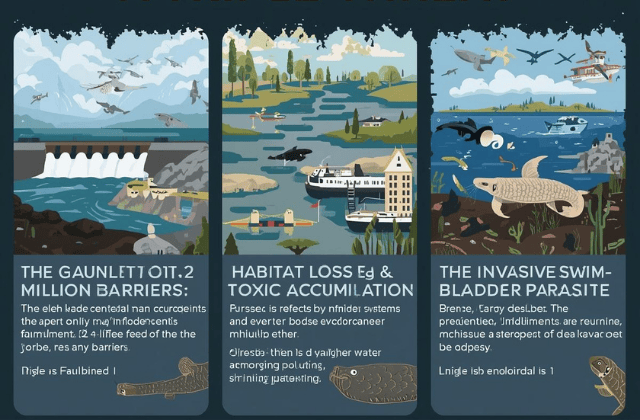
The European eel decline is driven by three specific human-caused stressors:
I. The Gauntlet of 1.2 Million Barriers
Europe’s rivers are fragmented by over 1.2 million dams and weirs. Mature silver eels are often pulverized by hydropower turbines. Organizations like Dam Removal Europe are leading the charge to reconnect these “blue highways.”
II. Habitat Loss & Toxic Accumulation
Eels are long-lived bottom-dwellers, making them “biological sponges” for PCBs and heavy metals. When they migrate, they burn toxic fat, which often prevents them from successfully spawning.
III. The Invasive Swim-Bladder Parasite
The nematode Anguillicola crassus damages the eel’s swim bladder, essential for buoyancy. An infested eel effectively “runs out of gas” before reaching its spawning grounds in the Sargasso Sea.
The €3 Billion Ghost: Europe’s Biggest Wildlife Crime
Illegal trade is a primary driver of the European eel decline. Glass eels are worth more than silver, fetching up to €3,500 per kilogram.
2026 Crackdown Updates:
- Operation LAKE: Europol’s multi-national task force has intercepted record amounts of live eels smuggled in oxygenated suitcases destined for Asian aquaculture farms.
- The Money Trail: Investigations show that eel trafficking is now Europe’s largest wildlife crime, generating up to €3 billion annually in illicit revenue.
Restoration Strategies: New Tech and Dam Removal
While the situation is critical, 2026 marks a turning point in regenerative infrastructure:
- Scientific Monitoring: Organizations like the ZSL (Zoological Society of London) are using citizen science and barrier assessment tools to track elver recruitment.
- Standardizing Responsibility: The Sustainable Eel Group (SEG) has developed a global standard to ensure full traceability and to fight the illegal trade from within the industry.
The 2026 Conservation Checklist
- [Avoid Eel on the Menu: 99% of global eel consumption consists of threatened species.
- Support Dam Removal: Advocate for your local water authority to remove obsolete weirs.
- Report Poaching: Use the AMBER Barrier Tracker app to report river obstacles or suspicious activity.
Frequently Asked Questions (FAQ)

Also Read:- Vaquita: The World’s Most Endangered Marine Animal