January 5, 2026
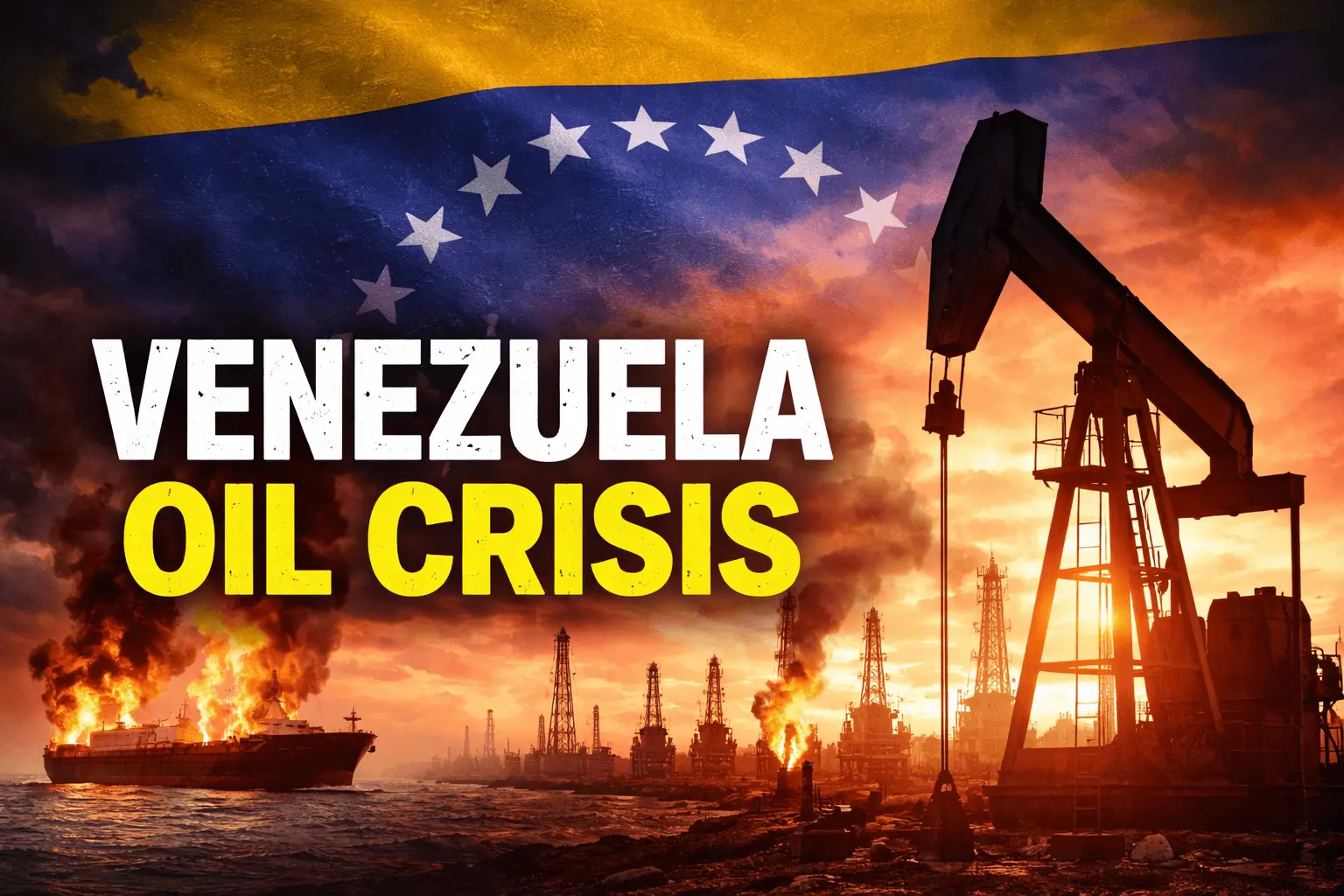
As Venezuela’s long-running political and economic crisis reaches a critical juncture, its impact on global oil security is forcing governments, energy markets, and strategic planners worldwide to reassess vulnerabilities in the international energy system.
In early January 2026, a bold U.S. military operation resulted in the capture of Venezuelan President Nicolás Maduro and the installation of an interim government, sparking sharp geopolitical reactions and deepening uncertainty surrounding the world’s largest proven oil reserves.
Venezuela: Oil Giant in Decline, But Still Strategically Central
Venezuela holds an estimated 303 billion barrels of crude reserves, more than Saudi Arabia’s total, yet its current production has collapsed to roughly 860,000-1.1 million barrels per day, representing less than 1% of global output — a steep fall from its 20th-century peak.
Years of mismanagement, corruption, and sanctions have sapped the country’s oil-industry infrastructure. Decades of under investment mean any realistic recovery will require tens of billions of dollars and a decade or more of sustained work to restore production capacity.
Short-Term Volatility, Limited Price Shock — For Now
Despite the dramatic backdrop, markets have so far responded with relative calm. Global crude benchmarks such as Brent and West Texas Intermediate edged lower on January 5 as traders balanced geopolitical risk against a broader global oversupply environment.
Analysts note that Venezuela’s modest output — significant in reserve size but limited in actual barrels flowing to market — means immediate supply shocks are unlikely to dramatically destabilize prices. Still, heavy crude grades that Venezuela traditionally supplies could tighten specific refinery margins if flows remain constrained.
U.S. Blockade and Strategic Risk Premiums
A sweeping U.S. blockade on Venezuelan oil shipments and sanctions on tankers have effectively halted exports, forcing storage to capacity and pushing PDVSA to curtail production. Logistics Insider
While Venezuela isn’t currently a major swing producer, the political risk premium embedded in global energy markets has risen as strategic planners consider worst-case scenarios where key heavy crude supplies are disrupted. Experts warn such risks could feed into diesel and jet-fuel tightness, affecting transportation and agriculture globally if supply imbalances widen.
Great-Power Competition and Realignment
The Venezuela crisis has underscored shifting global alliances in the energy realm. China — historically the largest buyer of Venezuelan oil — is recalibrating its energy strategy and supply chains in response to sanctions and naval interdictions. Russia and other oil exporters, watching closely, may reassess their own geopolitical exposures to U.S. pressure.
Meanwhile, the U.S. has articulated plans to attract Western investment to rebuild Venezuela’s oil infrastructure and reshape the country’s place in global energy markets — a move analysts say will be costly and fraught with legal and ethical challenges.
Regional and Global Implications
Latin American nations have reacted with a mixture of concern and condemnation, while global investors weigh the implications of heightened political risk. Commodity markets are factoring in the possibility that Venezuela’s oil might one day return to the global mainstream in a more orderly fashion — but only after a period of political stabilization and massive capital infusion.
For countries like India, analysts note that direct effects on supply chains have been limited so far, thanks to sanctions that long ago reduced Caracas’s crude exports to New Delhi — but sentiment and investor interest in domestic energy equities have responded to broader geopolitical tensions.
Looking Ahead: A New Paradigm of Oil Security
The 2026 Venezuela crisis highlights a growing recognition that energy security is not merely a matter of supply and demand, but increasingly one of geopolitics, infrastructure resilience, and strategic chokepoints. As governments seek to insulate themselves from disruptions — whether in Venezuela, the Middle East, or the maritime chokepoints of the Indo-Pacific — the definition of oil security is evolving toward diversification, redundancy, and geopolitical hedging.
In a world still reliant on oil even as the energy transition accelerates, Venezuela’s fate will remain a bellwether for how crises in producer states reverberate far beyond their borders — shaping energy policy and strategic thinking well into the decade.
Also Read:- 2025 Hottest Year Climate Report: Earth Ranks in Top 3 Warmest Years Ever
Primary Global Energy & Geopolitics Sources
- https://www.reuters.com/world/us/venezuelas-maduro-custody-trump-says-us-will-run-country-2026-01-04/
- https://www.reuters.com/business/energy/venezuelas-pdvsa-asks-some-joint-ventures-cut-back-oil-output-sources-say-2026-01-04/
- https://www.reuters.com/business/energy/oil-prices-slip-ample-supply-despite-political-turmoil-venezuela-2026-01-04/
- https://www.ft.com/content/4a21608d-363c-467c-9698-b6c083715493
- https://time.com/7343019/venezuela-trump-oil-china/
Oil Market & Energy Security Analysis
- https://oilprice.com/Energy/Crude-Oil/Venezuelas-Falling-Crude-Supply-Wont-Budge-Global-Oil-Market.html
- https://www.atlanticcouncil.org/dispatches/us-just-captured-maduro-whats-next-for-venezuela-and-the-region/