
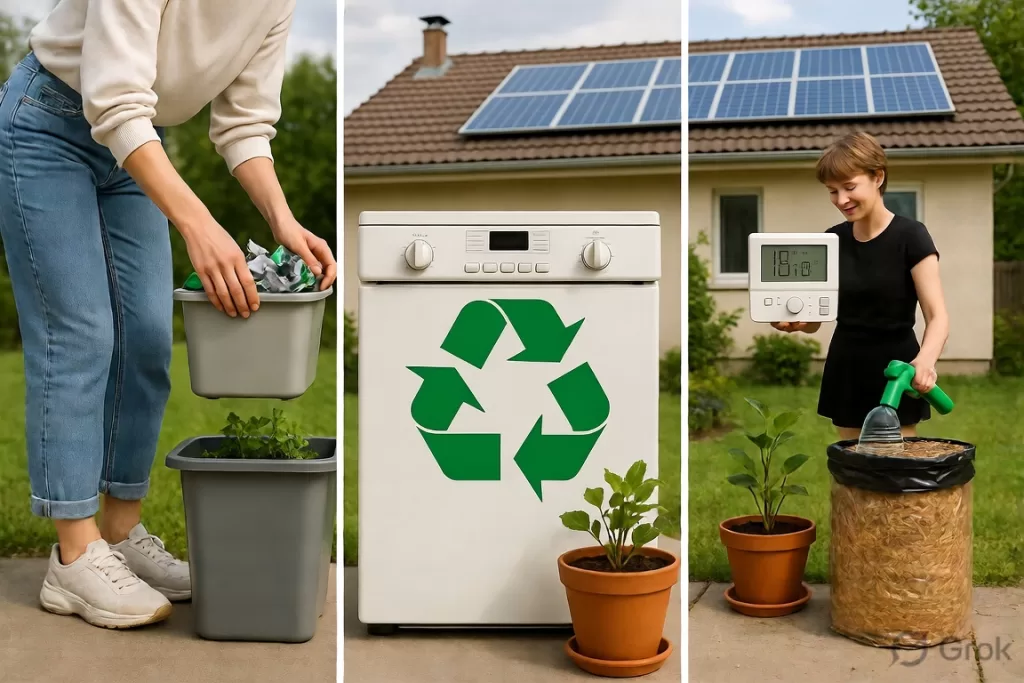
Households remain one of the largest sources of global emissions, but they’re also one of the easiest places to make a real dent — often while saving money. Here’s a practical breakdown of how to reduce your carbon footprint at home in 2026, ranked by actual impact.
Why Home Emissions Matter So Much
Heating, cooling, electricity use, and transportation choices tied to your household add up fast — heating and cooling alone often account for 40–50% of household energy use. That means the biggest wins usually come from a handful of high-impact changes, not dozens of small ones. Go Greener And Clean
The Highest-Impact Changes You Can Make
What matters most first: home energy source and efficiency, followed by transportation, then diet and consumption habits.
- Switching your home from oil, gas, or coal-powered energy to renewable sources like wind or solar can reduce your carbon footprint by up to 1.5 tons of CO2e per year United Nations
- Improving home energy efficiency — better insulation or replacing a gas furnace with an electric heat pump — can cut up to 900 kilograms of CO2e per year
- Living car-free can reduce your footprint by up to 2 tons of CO2e per year compared to regular car use, while switching to an electric vehicle can save up to 2 tons of CO2e annually, and a hybrid up to 700 kilograms
Everyday Habits That Add Up
- Wash laundry in cold water and air-dry when possible
- Switch to LED lighting and unplug devices on standby
- Shift toward a more plant-based diet — a vegetarian diet can cut up to 500 kilograms of CO2e per year, and a vegan diet up to 900 kilograms
- Buy less, choose durable goods, and shop secondhand where practical
- Reduce food waste and start composting to cut methane from landfill
What Else You Can Do
Buying fewer new clothes and consumer goods matters too — each kilogram of textiles produced generates roughly 17 kilograms of CO2e. Small shifts like choosing tap water over bottled, repairing instead of replacing, and supporting local, seasonal food all compound over a year.
Key Takeaways
Reducing your carbon footprint at home in 2026 doesn’t require an all-or-nothing lifestyle overhaul. Prioritizing energy source and efficiency first, transportation second, and consumption habits third gets you the most impact for the effort — and often pays for itself through lower utility bills.