
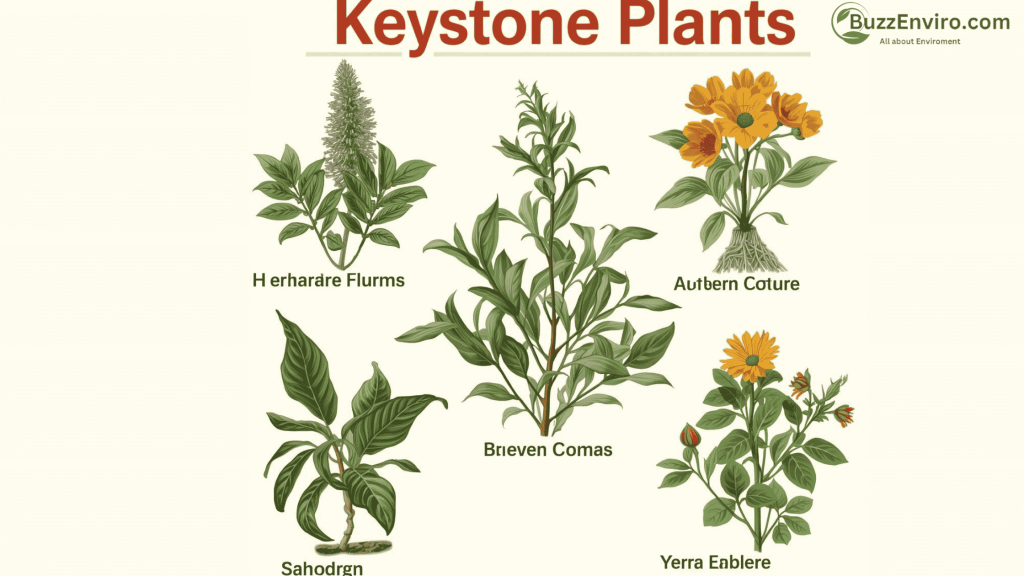
In the evolving landscape of 2026, the traditional “manicured lawn” is rapidly becoming a relic of the past. As climate volatility increases and global insect populations face unprecedented pressure, gardeners are shifting toward a more functional aesthetic. The core of this movement? Keystone Power Plants.
If an ecosystem is an arch, keystone plants are the single stone at the top that prevents the entire structure from collapsing. By strategically integrating these biological workhouses, you can transform a simple backyard into a high-functioning wildlife sanctuary.
🌿 Table of Contents
- What are Keystone Plants? (The Simple Science)
- Why Keystone Plants Matter More Than Ever in 2026
- Keystone Plants vs. Ornamental Plants
- The Critical Role in Pollinator Survival
- Climate Resilience & Urban Gardens
- Region-Based Examples of Keystone Power Plants
- How to Start a Keystone Biodiversity Garden
- The Future of Biodiversity Gardening (2026+)
- Conclusion: Planting with Purpose
- FAQ
What are Keystone Plants? (The Simple Science)
The term “keystone” comes from the architectural stone at the peak of an arch that holds all other stones in place. In ecology, keystone plants are a unique subset of native species that provide a disproportionately large amount of food and shelter to local wildlife.
While many native plants support a few insect species, Keystone Power Plants are the “super-producers” of the botanical world. Research by entomologist Dr. Doug Tallamy has shown that a mere 14% of native plant genera support 90% of butterfly and moth species. Without these specific plants, the local food web effectively starves.
Why Keystone Plants Matter More Than Ever in 2026?
In 2026, we are witnessing a shift from “sustainable” to “regenerative” gardening. Keystone plants are no longer a niche interest for ecologists; they are a necessity for several reasons:
- Food Web Stability: 96% of terrestrial birds feed their young exclusively on insects (primarily caterpillars). Keystone plants act as “caterpillar factories,” ensuring birds have enough protein to raise their broods.
- Genetic Preservation: As wild habitats shrink, residential gardens are becoming vital “islands” of genetic diversity.
- Ecosystem Services: These plants help with carbon sequestration, soil stabilization, and natural water filtration more effectively than non-native counterparts.
Keystone Plants vs. Ornamental Plants
To the untrained eye, a garden full of blooming Butterfly Bushes (Buddleja) looks like a success. However, there is a massive functional difference between ornamental beauty and ecological value.
| Feature | Ornamental Plants | Keystone Power Plants |
| Origin | Often non-native (Exotic) | Locally native |
| Pollinator Role | Nectar source (The “snack”) | Host plant + Nectar (The “cradle”) |
| Biodiversity Impact | Supports generalists only | Supports specialist & generalist species |
| Resilience | May require extra water/pesticides | Adapted to local soil and climate |
While an ornamental plant might provide sugar (nectar) to a passing butterfly, it rarely provides the specific leaf chemistry needed for that butterfly’s larvae to survive. Keystone plants provide the full lifecycle support.
The Critical Role in Pollinator Survival
We often think of “saving the bees” as a general task, but many native bees are pollen specialists. They have co-evolved to feed their larvae only the pollen from specific plant families.
For example, Goldenrods (Solidago) and Native Asters (Symphyotrichum) are late-season powerhouses. They provide the final high-energy boost for migrating Monarchs and the specific pollen needed for specialist bees to provision their nests for winter. If these “power plants” are missing from your 2026 garden, those specialist species simply disappear from your zip code.
Climate Resilience & Urban Gardens
One of the biggest gardening trends for 2026 is Climate-Resilient Design. Keystone plants are naturally “programmed” for your specific region’s extremes.
- Drought Tolerance: Deep-rooted keystone trees like Oaks (Quercus) can withstand heatwaves better than exotic ornamentals.
- Urban Heat Islands: In cities, keystone shrubs provide vital shade and cooling through evapotranspiration, reducing the local temperature more effectively than concrete-heavy landscaping.
- Flood Mitigation: Native keystone grasses have massive root systems (sometimes reaching 10-15 feet deep) that act as sponges during the intense rain events common in the mid-2020s.
Region-Based Examples of Keystone Power Plants
While “native” depends on where you live, several genera are consistently identified as high-performers across North America:
1. Oaks (Quercus)

The undisputed kings of biodiversity, supporting over 900 species of caterpillars.
2. Willows (Salix)
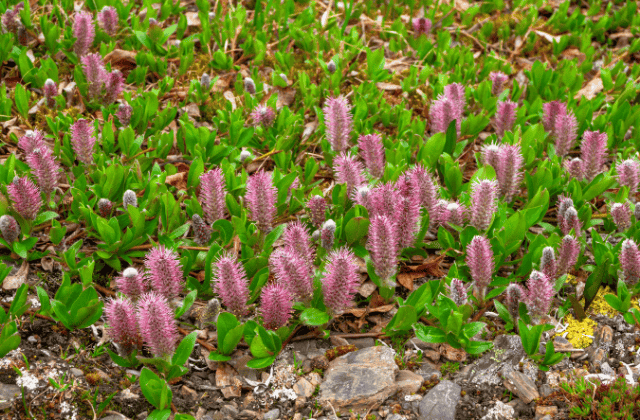
Vital early-spring nectar for emerging bees and a host to hundreds of moth species.
3. Goldenrods (Solidago)
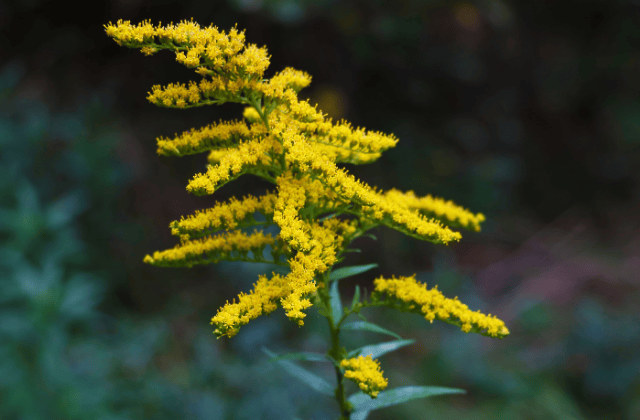
A fall essential that supports dozens of specialist bee species.
4. Native Sunflowers (Helianthus)
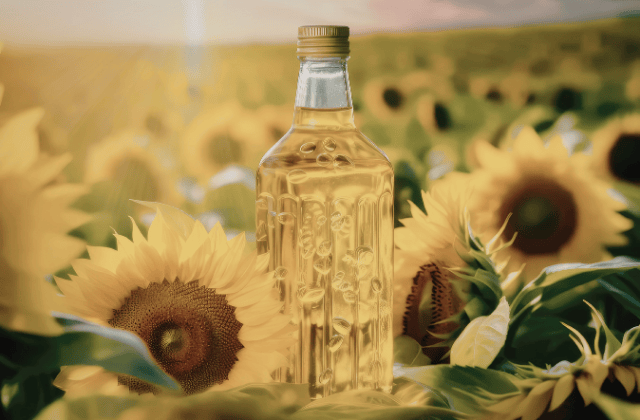
High-protein seeds for birds and critical pollen for bees.
How to Start a Keystone Biodiversity Garden
Transitioning to a biodiversity-focused garden doesn’t require a total overhaul. Use the 70% Rule: Aim for 70% native biomass to maintain a stable bird population.
- Step 1: Identify Your Ecoregion. Use tools like the National Wildlife Federation’s Keystone Plant List to find what belongs in your specific county.
- Step 2: Start with One “Anchor” Tree. If you only have room for one plant, make it a native Oak or Cherry (Prunus).
- Step 3: Remove “Ecological Traps.” Replace invasive species like English Ivy or Burning Bush, which take up space without providing nutritional value.
- Step 4: Layer Your Planting. Mimic nature by planting a canopy tree, understory shrubs, and a ground layer of keystone perennials.
The Future of Biodiversity Gardening (2026+)
Looking toward 2027 and beyond, “Keystone Power Plants” will be the foundation of the Homegrown National Park movement. We are moving away from gardens as static “pictures” and toward gardens as dynamic engines of life.
Future trends include:
- Smart Pollinator Corridors: Neighborhoods coordinating to plant overlapping keystone species to create “highways” for wildlife.
- Biodiversity Scoring: Real estate listings in 2026 are increasingly highlighting “Certified Wildlife Habitat” status as a value-add.
- AI-Driven Plant Matching: Apps that use your local soil data and climate projections to suggest the perfect keystone species for the next 20 years of growth.
Conclusion: Planting with Purpose
In 2026, your garden is more than a hobby—it’s a vital piece of the global conservation puzzle. By prioritizing Keystone Power Plants, you aren’t just growing flowers; you are fueling the food web, cooling your community, and ensuring that the “secret” to a thriving planet starts right outside your back door.
Also Read:- 20 Fast-Growing Trees for a Quick and Beautiful Garden Transformation
Frequently Asked Questions
1. Can I grow keystone plants in containers?
Yes! Many keystone genera have smaller species. For instance, some native sunflowers and asters thrive in pots on a balcony, providing a vital “pit stop” for urban pollinators.
2. Are keystone plants high maintenance?
Actually, they are often lower maintenance once established. Because they are adapted to your local environment, they generally require less fertilizer and water than non-native species.
3. Will a keystone garden look “messy”?
Not at all. You can apply traditional design principles such as massing, color theory, and clean edging to keystone plants to create a look that is both sophisticated and ecologically functional.