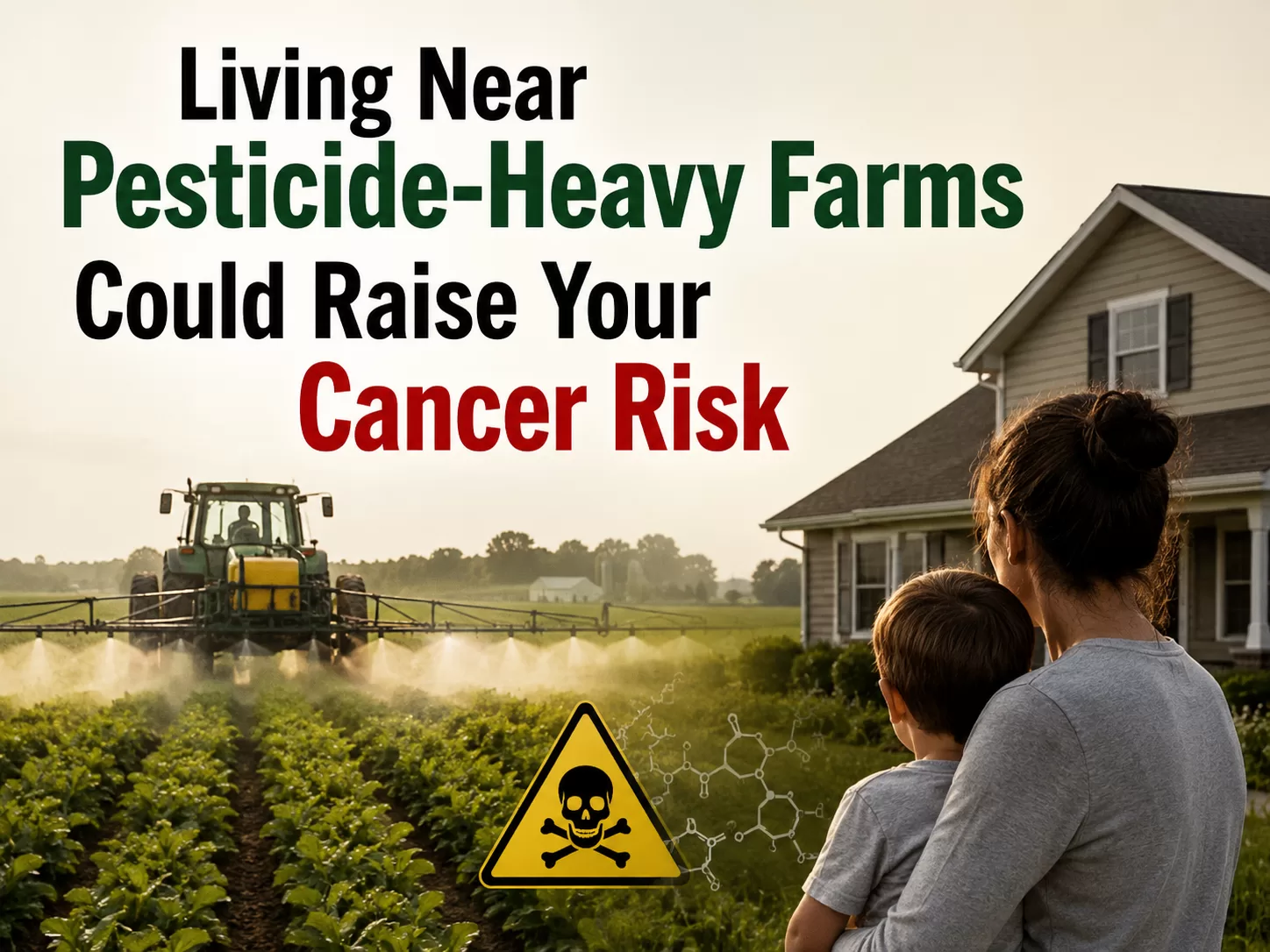
Most people assume that if a pesticide is approved for use, it is safe. A landmark study published in Nature Health in 2026 has shattered that assumption. Researchers from the Institut Pasteur, the University of Toulouse, and Peru’s National Institute of Neoplastic Diseases have found that living in environments with heavy agricultural pesticide use is associated with up to a 150% higher risk of developing cancer — even when the individual chemicals involved are each considered safe on their own. The culprit: toxic mixtures that operate in ways no single-substance test can predict.
Why Pesticide Research Has Struggled — Until Now
For decades, regulatory agencies around the world have assessed pesticides one chemical at a time. A substance gets tested in isolation, a safe exposure threshold is determined, and a legal limit is set. If the compound stays below that limit, it is considered acceptable. This approach has a fundamental flaw: people are never exposed to just one pesticide.
In farming communities and agricultural regions worldwide, people encounter dozens of pesticides simultaneously — in the air they breathe, the water they drink, the soil their children play in, and the food they eat. Until now, science lacked the tools to study these complex, real-world mixtures at population scale. The 2026 study changes that entirely, using an innovative integrative approach that maps environmental exposure data against national cancer registry records and biological laboratory analysis.
What the Researchers Found
The study focused on Peru — a country with intensive agriculture across diverse ecosystems and documented high pesticide contamination in vulnerable communities. The research team combined three data sources:
- Environmental mapping: Satellite and monitoring data identifying regions with highest agricultural pesticide pollution across 31 chemical compounds
- Cancer registry data: National incidence records tracking which regions had elevated rates of specific cancers
- Biological analysis: Laboratory investigation of how pesticide mixtures affect cells at the molecular level
The results were striking on all three fronts. Regions with the heaviest environmental pesticide exposure had cancer rates approximately 150% higher than regions with lower exposure. Indigenous and peasant communities bore the greatest burden — on average simultaneously exposed to 12 different pesticides at high concentrations, with little access to protective equipment or healthcare.
At the cellular level, molecular analysis revealed that pesticide mixtures — even those composed of individually “safe” chemicals — disrupt cellular processes and induce early biological changes that may prime tissues for cancerous transformation years or decades before a diagnosis. The mechanisms identified include oxidative stress, disruption of hormone signalling, immune suppression, and interference with DNA repair pathways.
The key finding is that mixture toxicity is not additive; it is synergistic. Chemicals that cause minimal harm individually can combine to produce effects far greater than the sum of their parts.
Who Is Most at Risk?
The study highlights profound environmental injustice at the heart of pesticide exposure:
- Agricultural workers who apply pesticides without adequate protective gear face the highest direct exposure
- Indigenous and rural farming communities in Latin America, South Asia, and sub-Saharan Africa face disproportionate exposure with the least regulatory protection
- Children are particularly vulnerable due to their developing physiology, higher breathing rates relative to body size, and tendency to play in soil and outdoor environments
- Residents near large-scale monoculture farming — including fruit, vegetable, and cotton plantations — face persistent ambient exposure through contaminated groundwater and airborne pesticide drift
- Consumers face lower but chronic exposure through pesticide residues on food — a route that, at population scale across decades, may carry cumulative health consequences
Specific cancer types linked in the study to high pesticide exposure regions include haematological cancers (leukaemia, lymphoma), liver cancer, and certain gastrointestinal cancers. Researchers caution that the study establishes association, not absolute causation, and that further large-scale research across additional countries is needed.
What Needs to Change
The study has direct implications for pesticide regulation globally:
- Mixture testing must become standard: Regulatory agencies including the EU’s EFSA, the US EPA, and global counterparts must develop frameworks to assess pesticide cocktails, not just single compounds.
- Precautionary bans on high-risk chemicals: Several compounds identified in the study as high-risk are already banned in the EU but remain in use in low- and middle-income countries. Harmonizing standards globally is urgent.
- Agroecological transition support: Shifting farming systems toward reduced-pesticide and organic methods — backed by government subsidy and technical support — reduces exposure at the source.
- Community monitoring: Populations living near intensive agriculture deserve real-time pesticide monitoring data and transparent disclosure of what they are being exposed to.
The researchers from Institut Pasteur described the findings as a call to move beyond single-substance risk assessment and toward genuine environmental health protection for the world’s most exposed communities.