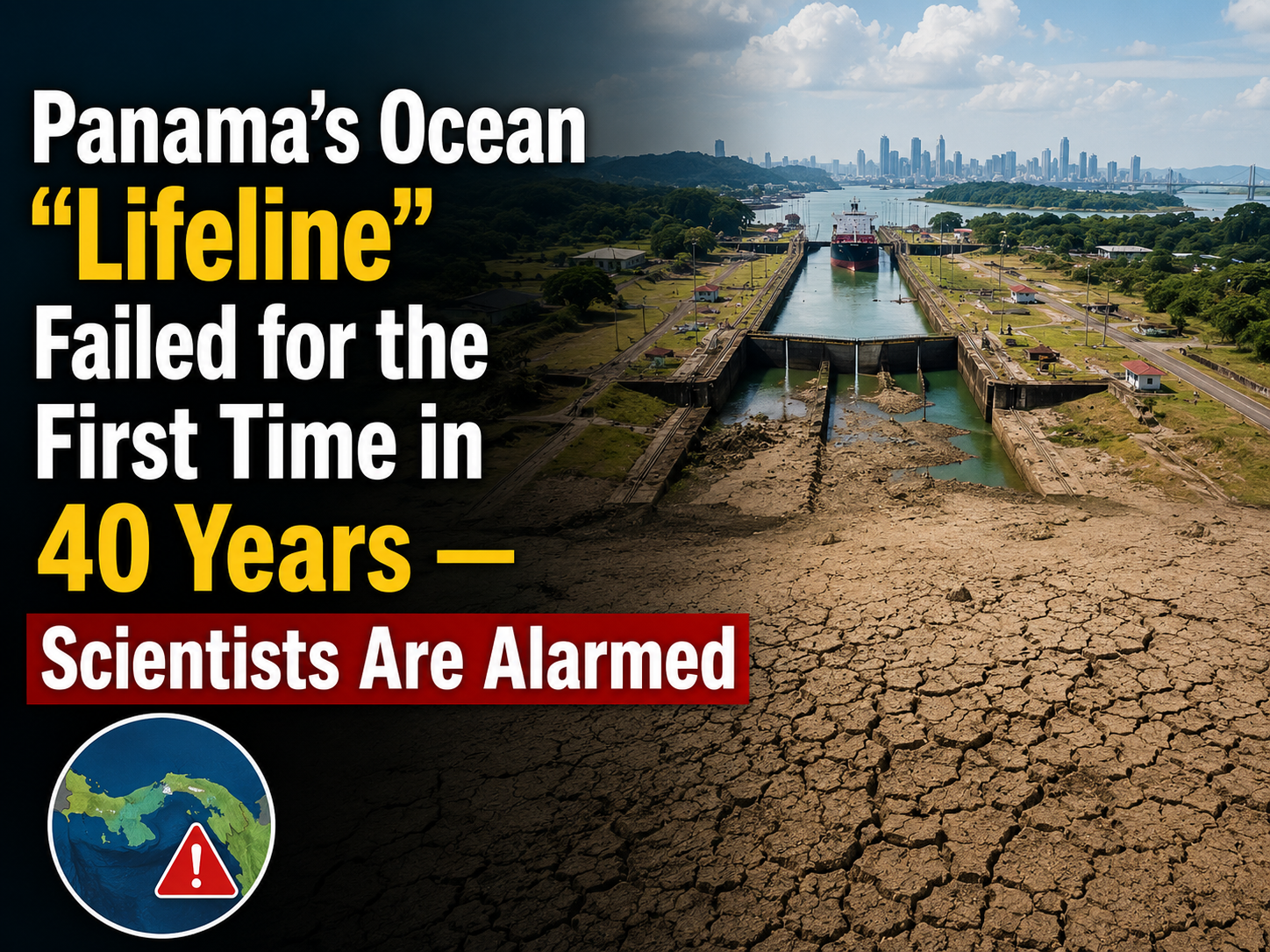
Every year between January and April, a powerful and predictable natural event transforms the Gulf of Panama. Strong seasonal trade winds push warm surface water offshore, drawing cold, nutrient-rich water up from the deep ocean. This process — called upwelling — triggers one of the region’s most productive marine blooms, feeding fish, seabirds, marine mammals, and the coastal fishing communities that have depended on this annual pulse for generations. In 2025, for the first time in at least 40 years of recorded observation, it did not happen. The ocean’s lifeline went silent.
What Is Ocean Upwelling and Why Does It Matter?
Upwelling is one of the ocean’s most critical biological processes. When wind pushes surface water away from the coast or across the open ocean, colder water from depths of hundreds of metres rises to fill the gap. That cold water carries nutrients — phosphates, nitrates, silicates — that surface waters have long since depleted through biological consumption.
When those nutrients reach the sunlit upper ocean, phytoplankton explode in number, turning the sea green and red with algal blooms visible from space. That bloom feeds zooplankton, which feeds small fish such as sardines and anchovies, which feed larger fish, seabirds, dolphins, and whales. The entire marine food web of the Gulf of Panama — and the fishing industries that harvest it — is powered by this seasonal nutrient injection.
The Gulf of Panama’s upwelling has been uniquely reliable compared to other tropical upwelling zones worldwide, making its 2025 failure particularly significant.
What Happened in 2025
Scientists from the Smithsonian Tropical Research Institute (STRI) and the Max Planck Institute for Chemistry had been monitoring the Gulf of Panama since 1985 using satellite data, and since 1995 with direct ocean temperature measurements. Their findings, published in the Proceedings of the National Academy of Sciences (PNAS), document the event clearly.
In early 2025, the Intertropical Convergence Zone — a band of atmospheric activity that shifts south in the dry season — failed to generate the strong northerly trade winds that normally drive the upwelling. Without wind to push surface water offshore, no cold water rose from the deep. The gulf remained warm. Chlorophyll concentrations — a direct measure of biological productivity — crashed to near zero in satellite imagery that normally shows the water blazing with productivity.
Research vessels confirmed what the satellites showed: the thermocline (the boundary between warm surface water and cold deep water) remained at depth. Warm, nutrient-depleted water sat over the gulf throughout a season when cold, nutrient-rich water should have sustained a marine bloom feeding millions of organisms.
Key consequences documented:
- Fish populations: Sardines, mackerel, and squid — the backbone of Panama’s artisanal fisheries — lost their primary seasonal feeding opportunity
- Seabirds and marine mammals: Species that follow the fish bloom were deprived of a critical annual food source
- Coral reefs: Normally cooled by upwelling waters each dry season, reef systems remained in warmer water for longer — increasing bleaching stress
- Coastal fishing communities: Fishing families who depend on the seasonal productivity surge for their annual income faced a harvest shortfall
Is This a Climate Signal — or a One-Off?
Scientists are careful not to overstate conclusions from a single failed year. Gerald Haug, Director of the Climate Geochemistry Department at the Max Planck Institute, noted that it was too early to conclude definitively that ocean warming will permanently reduce tropical Pacific upwelling. The 2026 season, monitored in near real-time by the STRI team, showed upwelling returning with strength in February — before partially collapsing again in early March when trade winds failed a second time.
What makes the event alarming is not just that it happened, but what it reveals:
- Tropical upwelling systems are poorly monitored globally, meaning failures like this likely go undetected and undocumented in most regions
- The Gulf of Panama’s failure happened during a year when El Niño-like warming was already elevating Pacific ocean temperatures — a pattern set to intensify with the building 2026 Super El Niño
- Climate models predict that as greenhouse warming continues, the trade winds that drive tropical upwelling may weaken across multiple regions — threatening marine productivity from the Pacific to the Indian Ocean
What Comes Next for Panama and Beyond
STRI researchers have established a dedicated public monitoring page tracking the Gulf of Panama’s upwelling week by week in 2026. Their close observation represents exactly the kind of enhanced tropical ocean monitoring scientists say is desperately needed globally.
Broader action priorities include:
- Expanding monitoring networks across tropical upwelling zones that currently lack long-term observational records
- Protecting artisanal fisheries with contingency support funding when seasonal productivity fails
- Reducing additional stressors — overfishing, coastal pollution — to give marine ecosystems more resilience against climate disruption
- Accelerating emissions reductions to slow the ocean warming that makes upwelling systems increasingly vulnerable
Key Takeaways
The Gulf of Panama ocean upwelling collapse of 2025 is a warning from one of the ocean’s most productive and well-studied systems: ancient, reliable marine cycles are not immune to climate disruption. When the winds change and the cold water stops rising, entire food webs feel the silence. Whether 2025 was a one-off anomaly or the first sign of a permanent shift may be the most important ocean science question in the tropical Pacific right now.