Meta Description: Worried about PFAS in your tap water? Learn how to test for “forever chemicals” using certified labs and home kits, plus understand EPA’s 2026 safety standards.
Per- and polyfluoroalkyl substances, commonly known as PFAS, are a group of synthetic chemicals used in consumer products since the 1940s. Often called “forever chemicals” because they do not break down in the environment or the human body, they have become a major concern for global water safety. PFAS water testing is the only definitive way to identify these invisible contaminants in your drinking supply and ensure your home meets the latest health safety guidelines.
📑 Table of Contents
What are PFAS and Why Are They in Your Water?
PFAS are found in everything from non-stick cookware to firefighting foams. Because of their molecular stability—specifically the strong carbon-fluorine bond—they migrate easily into soil and groundwater.
According to the Environmental Protection Agency (EPA) and the CDC, nearly all Americans have some level of PFAS in their blood. The primary source of this exposure is often contaminated drinking water, particularly in areas near industrial sites, airports, or military bases.
Health Risks of Long-Term Exposure
Research from the World Health Organization (WHO) and the National Institutes of Health (NIH) has linked prolonged PFAS exposure to:
- Increased cholesterol levels and obesity.
- Interference with the body’s natural hormones.
- Reduced immune system response (including lower vaccine efficacy).
- Increased risk of kidney and testicular cancers.
The 2026 EPA Standards: What You Need to Know
In early 2024, the EPA finalized the first-ever National Primary Drinking Water Regulation for six PFAS. As of 2026, the regulatory landscape is in a state of transition. While legal challenges have delayed some deadlines, the core health-based limits remain the gold standard for safety.
| PFAS Compound | Enforceable Limit (MCL) | Goal (MCLG) |
| PFOA | 4.0 parts per trillion (ppt) | Zero |
| PFOS | 4.0 parts per trillion (ppt) | Zero |
| PFNA | 10 parts per trillion (ppt) | 10 ppt |
| PFHxS | 10 parts per trillion (ppt) | 10 ppt |
Deep Research Logic: Why is the limit so low? One part per trillion is equivalent to a single drop of water in 20 Olympic-sized swimming pools. Scientists set these limits because even microscopic amounts can bioaccumulate over decades.
Professional vs. DIY: How to Check Your Tap Water
When looking at PFAS water testing: how to check your tap water, it is important to understand that not all tests are created equal.
1. Professional Laboratory Testing (Recommended)
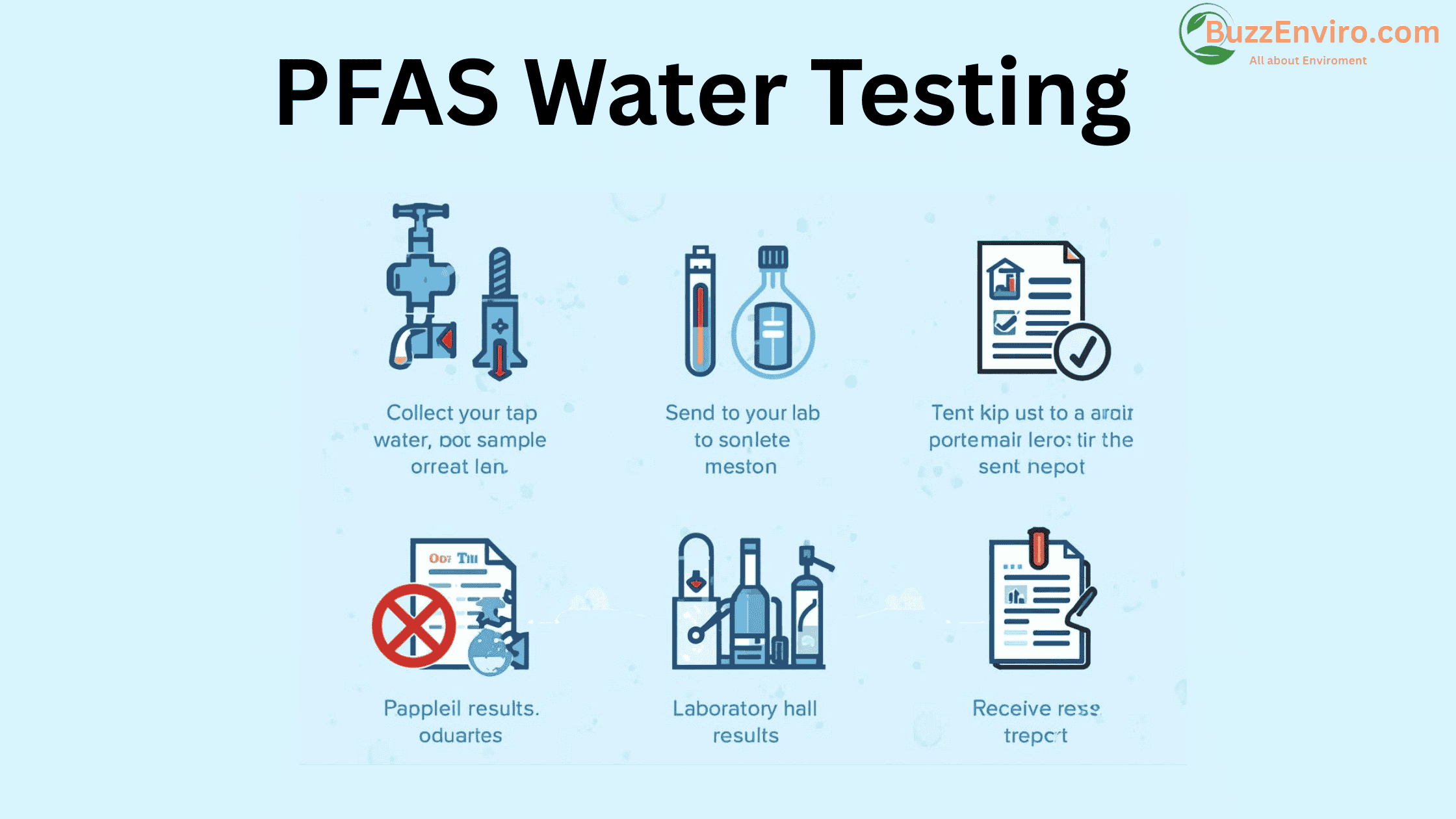
This is the only method that provides the precision required to measure parts per trillion. You order a kit, collect a sample, and mail it to a certified lab.
- Cost: $300 – $600.
- Accuracy: Extremely high (detects individual compounds like PFOA/PFOS).
2. At-Home “Screening” Kits
While some DIY kits claim to test for PFAS, most hardware store “test strips” cannot detect these chemicals at the low levels required for safety. Ensure any kit you buy utilizes EPA Method 537.1 or 1633.
Step-by-Step Guide to Professional Lab Testing
Testing for PFAS requires extreme care because these chemicals are present in so many everyday items. Cross-contamination can easily lead to a “false positive.”
- Order a Kit: Choose a lab certified by your state or the EPA.
- Avoid Contaminants: On the day of testing, do not use fabric softeners, certain shampoos, or waterproof clothing, as these may contain PFAS.
- Flush the Line: Run your cold water tap for 3–5 minutes to clear out standing water.
- The “Field Blank”: Most kits include a “Field Blank” bottle of pure water. You must open this during the process to prove the air in your home didn’t contaminate the sample.
- Ship Cold: PFAS samples usually need to be kept on ice and shipped overnight to the lab.
Action Steps: What to Do if PFAS are Detected
If your PFAS water testing results come back above the EPA’s 4.0 ppt limit, do not panic. High-quality filtration can remove up to 99% of these chemicals.
- Granular Activated Carbon (GAC): Effective and affordable; often used in whole-house or pitcher filters.
- Reverse Osmosis (RO): The most effective method for removing a wide spectrum of PFAS, though it produces more wastewater.
- Ion Exchange: High-capacity resin systems used for whole-home treatment.
Future Outlook: The Road to 2030
Public water utilities are currently in a multi-year “monitoring phase.” By 2027, most utilities must report their PFAS levels to the public, and by 2031, they are legally required to have treatment systems in place to meet federal limits. Until then, private testing remains the most reliable way for individuals to manage their own risk.
Frequently Asked Questions
1. Can I boil water to remove PFAS?
No. Boiling water does not remove PFAS; in fact, it may slightly increase the concentration as the water evaporates while the chemicals remain.
2. Does Brita or PUR filter out PFAS?
Standard “carbon block” filters help, but only those certified to the NSF/ANSI 53 or P473 standards are proven to reduce PFOA and PFOS significantly.
3. How often should I test my water for PFAS?
For private wells, testing every 2–3 years is recommended, or sooner if a new industrial source is identified nearby. For municipal water, check your city’s annual Water Quality Report (CCR).