
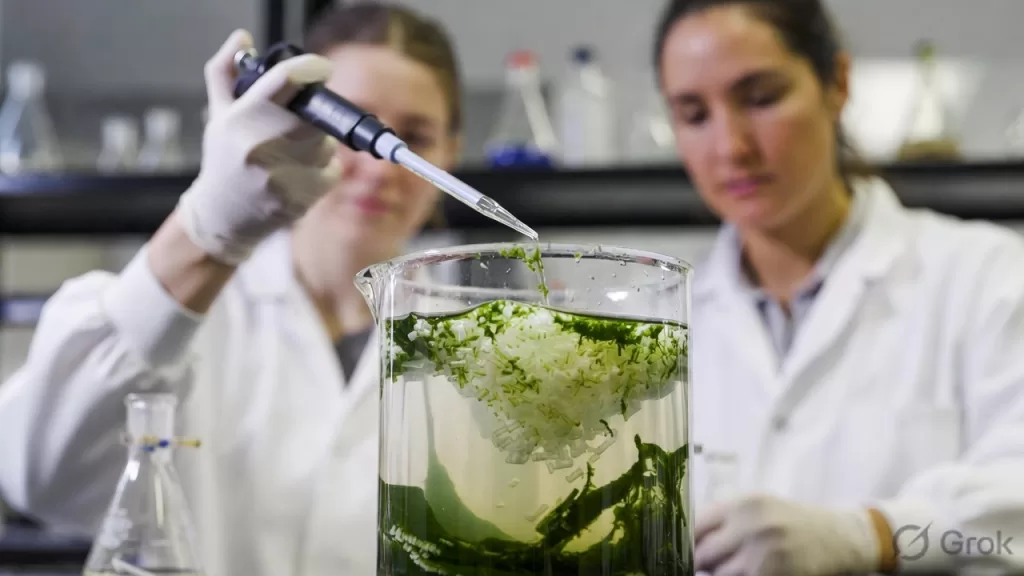
Two of the planet’s most urgent crises — plastic pollution and the need for clean energy — may share a single solution. Researchers at the University of Adelaide have published a roadmap in Chem Catalysis demonstrating how sunlight can be used to convert discarded plastic waste into clean hydrogen fuel and valuable industrial chemicals. It’s a development that could fundamentally change how the world thinks about plastic: not as an indestructible pollutant, but as an untapped energy resource.
The Dual Crisis This Solves
The scale of the global plastic problem is staggering. More than 460 million metric tons of plastic are produced each year worldwide, and tens of millions of tons end up polluting land, rivers, and oceans. Less than 10% of all plastic ever produced has been recycled. The rest accumulates in landfills, breaks into microplastics, and persists in ecosystems for hundreds of years.
At the same time, the transition away from fossil fuels demands enormous investment in clean energy infrastructure. Hydrogen is widely regarded as one of the most promising clean fuels — it produces only water when burned, and can power everything from industrial manufacturing to shipping to fuel-cell vehicles. The challenge has been producing hydrogen cleanly and affordably at scale, since most current hydrogen is made from natural gas through an emissions-heavy process.
Solar photoreforming offers a way to address both problems simultaneously.
How Solar Photoreforming Works
The research, led by University of Adelaide PhD candidate Xiao Lu and published in Chem Catalysis in 2026, focuses on a process called solar-driven photoreforming. The system uses light-activated materials called photocatalysts — substances that absorb sunlight and use that energy to drive chemical reactions.
When plastic waste is exposed to these photocatalysts in the presence of sunlight, the plastics are broken down at relatively low temperatures (compared to energy-intensive conventional chemical processes). The carbon and hydrogen atoms locked inside the plastic molecules are released as hydrogen gas, syngas (a mixture of hydrogen and carbon monoxide used in industrial chemistry), and other valuable chemicals.
Crucially, plastics are actually easier to oxidize than water using this photoreforming approach, making the process more energy-efficient than many alternative hydrogen production methods. Some solar photoreforming systems have already demonstrated continuous operation for over 100 hours while maintaining high conversion rates.
In a parallel development, researchers also demonstrated a variant using recycled battery acid to boost hydrogen production — a method claimed to cut costs compared to other plastic-to-fuel processes by a factor of ten.
Why This Is a Circular Economy Game-Changer
The implications of this technology go beyond simply producing fuel. By treating plastic waste as a feedstock rather than refuse, solar photoreforming slots directly into the circular economy model — where waste from one process becomes the raw material for another.
“Plastic is often seen as a major environmental problem, but it also represents a significant opportunity,” said Lu. “If we can efficiently convert waste plastics into clean fuels using sunlight, we can address pollution and energy challenges at the same time.”
This is especially significant for mixed or dirty plastics — the types that cannot be conventionally recycled due to contamination or material complexity. Solar photoreforming does not require the clean, sorted plastic streams that mechanical recycling demands. It can work with the hard-to-recycle waste streams that currently end up in landfills or are incinerated.
Challenges Before Scale-Up
Despite the promise, significant obstacles remain on the path from laboratory to global deployment. Current photocatalyst materials degrade over time and need to become more durable and cheaper to manufacture at scale. The systems need to demonstrate consistent performance across a range of plastic types and under varying sunlight conditions.
Infrastructure for collecting and feeding plastic waste into photoreforming plants will also need to be developed — a non-trivial logistical challenge given the fragmented and global nature of plastic waste streams. And while producing hydrogen via solar photoreforming has clear environmental benefits over fossil-fuel-based hydrogen production, the full lifecycle carbon analysis of the process is still being refined.
The Bigger Picture: Hydrogen as the Bridge Fuel
Green hydrogen produced from renewable processes — including solar photoreforming of plastic waste — is increasingly seen as the critical bridge fuel for decarbonizing sectors that cannot easily be electrified: steel production, shipping, aviation, and heavy industry.
Countries including Japan, South Korea, Germany, and India have already committed billions of dollars to green hydrogen infrastructure. A technology that can produce green hydrogen from plastic waste — using nothing but sunlight — would make those economies simultaneously cleaner, more energy-independent, and better at managing plastic pollution.
Key Takeaways
Adelaide University researchers have published a compelling blueprint for converting plastic waste into clean hydrogen fuel using solar-driven photoreforming. The technology addresses the plastic pollution crisis and the clean energy transition in a single process. While still in development, it represents one of the most exciting circular economy breakthroughs of 2026 — and a genuine glimpse of a future where today’s plastic waste powers tomorrow’s clean economy.