The climate crisis is no longer a distant or abstract problem—it is unfolding in real time across the world. In 2026, rising global temperatures, extreme heatwaves, destructive floods, intensifying storms, and prolonged droughts are becoming more frequent and severe. Scientists agree that these changes are not random. They are largely the result of human activities that have disrupted Earth’s natural climate systems over decades.
Understanding the causes of the climate crisis is essential for grasping why global warming continues despite growing awareness and international commitments. From the burning of fossil fuels and large-scale deforestation to industrial pollution and unsustainable consumption, human actions are accelerating climate change at an unprecedented pace. This article breaks down the key drivers behind the climate crisis and explains how they are reshaping the planet today.
1. Burning OF Fossil Fuels
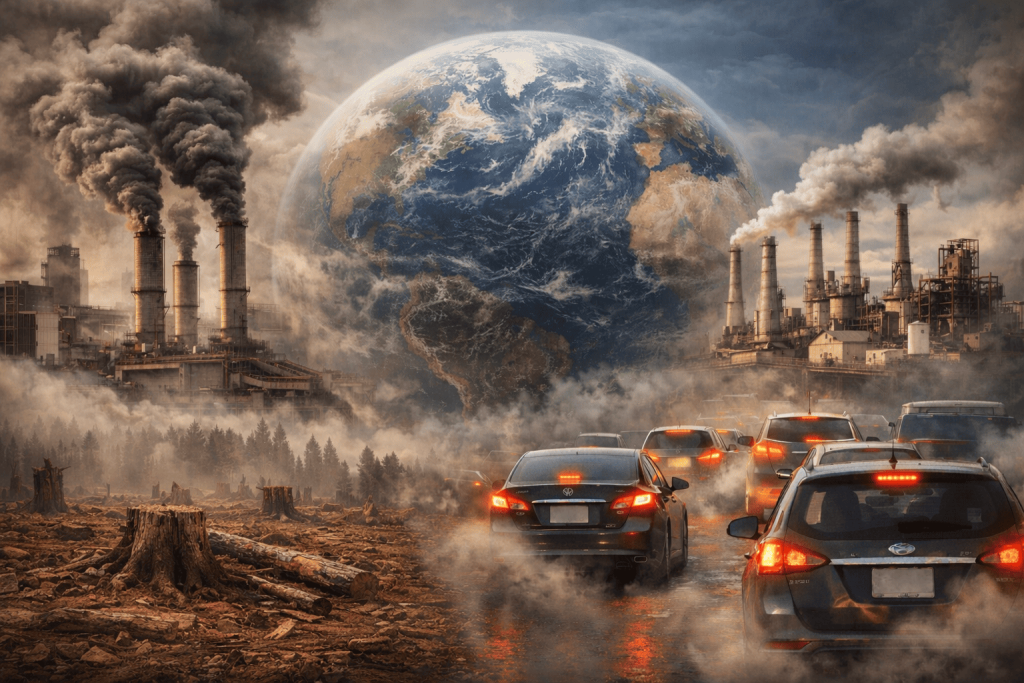
The primary cause of the climate crisis is the burning of fossil fuels such as coal, oil, and natural gas. These fuels power electricity generation, transportation, manufacturing, and heating systems across the world.
When fossil fuels are burned, they release large amounts of carbon dioxide (CO₂) and other greenhouse gases into the atmosphere. These gases trap heat, creating a “greenhouse effect” that warms the planet. Since the Industrial Revolution, atmospheric CO₂ levels have risen to their highest point in human history.
Even today, fossil fuels remain the dominant global energy source. This continued dependence is one of the main reasons global temperatures keep rising despite international climate pledges.
2. Deforestation and Forest Degradation
Forests play a vital role in regulating Earth’s climate. Trees absorb carbon dioxide from the atmosphere and store it in their biomass. When forests are cleared for agriculture, urban development, or logging, this stored carbon is released back into the air.
Deforestation also reduces the planet’s capacity to absorb future emissions. Large-scale forest loss in regions such as the Amazon, Southeast Asia, and Central Africa is accelerating the climate crisis while simultaneously driving biodiversity loss.
In 2026, scientists warn that continued deforestation could push critical ecosystems past irreversible tipping points.
3. Industrial Activities and Manufacturing Emissions
Industrial production is another major contributor to the climate crisis. Industries such as cement, steel, chemicals, and plastics generate significant greenhouse gas emissions through energy use and chemical reactions.
Cement production alone accounts for a substantial share of global carbon emissions. Many industrial processes also release methane and nitrous oxide — greenhouse gases far more potent than carbon dioxide over shorter time periods.
Rapid industrial growth, especially in developing economies without strict environmental regulations, continues to intensify the climate crisis.
4. Agriculture, Livestock, and Methane Emissions
Modern agriculture significantly contributes to climate change, particularly through livestock farming. Cattle and other ruminant animals produce methane during digestion, a greenhouse gas that traps heat far more effectively than carbon dioxide.
The use of synthetic fertilizers releases nitrous oxide, while large-scale farming often leads to deforestation, soil degradation, and water pollution. Industrial agriculture systems prioritize high output over sustainability, increasing emissions across the entire food supply chain.
As global food demand rises, agricultural emissions are becoming an increasingly serious climate challenge.
5. Transportation and Global Mobility
Transportation is one of the fastest-growing sources of greenhouse gas emissions. Cars, trucks, ships, and airplanes largely rely on fossil fuels, producing large quantities of carbon dioxide.
Urbanization, international trade, tourism, and global supply chains have dramatically increased transportation emissions. While electric vehicles and cleaner fuels are expanding, progress remains too slow to offset growing demand.
Without major shifts in transport systems, this sector will continue to fuel the climate crisis.
6. Overconsumption, Waste, and Unsustainable Lifestyles
Consumer behavior plays a powerful role in driving the climate crisis. High levels of consumption increase energy use, resource extraction, and industrial production — all of which generate emissions.
Fast fashion, single-use plastics, excessive packaging, and short product life cycles create enormous amounts of waste. Organic waste in landfills produces methane as it decomposes, adding another source of greenhouse gases.
In 2026, scientists increasingly emphasize that lifestyle changes are essential alongside technological solutions.
7. Feedback Loops That Accelerate Climate Change
Some impacts of climate change worsen the crisis further through feedback loops. For example, melting ice reduces Earth’s ability to reflect sunlight, causing more heat absorption. Thawing permafrost releases methane stored in frozen soils, accelerating warming even faster.
These feedback mechanisms mean that delays in action make the climate crisis harder — and more expensive — to control.
Why the Climate Crisis Is Worsening Despite Global Awareness
Despite decades of warnings, global emissions continue to rise. Economic dependence on fossil fuels, political resistance, misinformation, and slow policy implementation all contribute to inaction.
While international agreements exist, many countries struggle to meet their climate commitments. The gap between climate science and real-world action remains one of the greatest challenges of our time.
What Happens If the Causes Are Not Addressed?
If the underlying causes of the climate crisis remain unchecked, the world faces increasingly severe consequences. These include food and water shortages, mass displacement, rising health risks, ecosystem collapse, and economic instability.
Climate impacts will not be evenly distributed. Vulnerable communities and developing nations will suffer the most, intensifying global inequality and humanitarian crises.
Understanding the Causes Is the First Step Toward Solutions
The climate crisis is largely the result of human activities — from burning fossil fuels and deforestation to industrial pollution and unsustainable consumption. While the challenge is immense, understanding these causes provides a roadmap for action.
Reducing emissions, protecting ecosystems, transforming energy systems, and changing consumption patterns can still limit the worst impacts of climate change. The choices made today will determine the planet’s future for generations to come.
❓ FREQUENTLY ASKED QUESTIONS
1. What is the main cause of the climate crisis?
The main cause of the climate crisis is the burning of fossil fuels such as coal, oil, and natural gas. These activities release greenhouse gases that trap heat in the atmosphere and drive global warming.
2. Are humans responsible for climate change?
Yes. Scientific evidence shows that human activities, including industrial emissions, deforestation, agriculture, and overconsumption, are the primary drivers of modern climate change.
3. How does deforestation contribute to the climate crisis?
Deforestation releases stored carbon dioxide into the atmosphere and reduces the planet’s ability to absorb future emissions, accelerating global warming.
4. Why is methane dangerous for the climate?
Methane is a powerful greenhouse gas that traps much more heat than carbon dioxide over short periods, making it a major contributor to rapid warming.
5. Can the climate crisis still be slowed?
Yes. Reducing fossil fuel use, protecting forests, shifting to renewable energy, and adopting sustainable lifestyles can still limit the worst impacts of climate change.How does deforestation contribute to the climate crisis?
Deforestation releases stored carbon dioxide into the atmosphere and reduces the planet’s ability to absorb future emissions, accelerating global warming.
6. Why is methane dangerous for the climate?
Methane is a powerful greenhouse gas that traps much more heat than carbon dioxide over short periods, making it a major contributor to rapid warming.
7. Can the climate crisis still be slowed?
Yes. Reducing fossil fuel use, protecting forests, shifting to renewable energy, and adopting sustainable lifestyles can still limit the worst impacts of climate change.
8. Which human activity causes the most climate damage?
Burning fossil fuels for energy and transportation causes the largest share of global greenhouse gas emissions.
Also Read:- Climate Change and Human Health: Why the Crisis Is Becoming a Global Emergency in 2026