
Extreme weather events are no longer rare or unexpected. Across the world, communities are experiencing stronger heatwaves, heavier rainfall, destructive floods, powerful storms, and prolonged droughts. These events are becoming more frequent and intense, disrupting ecosystems, economies, and everyday life.
Scientists agree that these extreme patterns are not isolated incidents. They are the result of long-term environmental pressure caused by human activities, rising global temperatures, and the weakening of natural systems that once helped regulate the planet’s climate.
What Are Extreme Weather Events?
Extreme weather events refer to weather conditions that are significantly more severe or unusual than historical averages. These events include:
- Prolonged heatwaves
- Intense rainfall and flash flooding
- Hurricanes, cyclones, and severe storms
- Long-lasting droughts
- Wildfires spreading rapidly
- Sudden cold snaps and snowstorms
While Earth has always experienced natural weather variation, the speed and intensity of these changes have increased dramatically in recent decades.
Why Extreme Weather Is Becoming More Common?
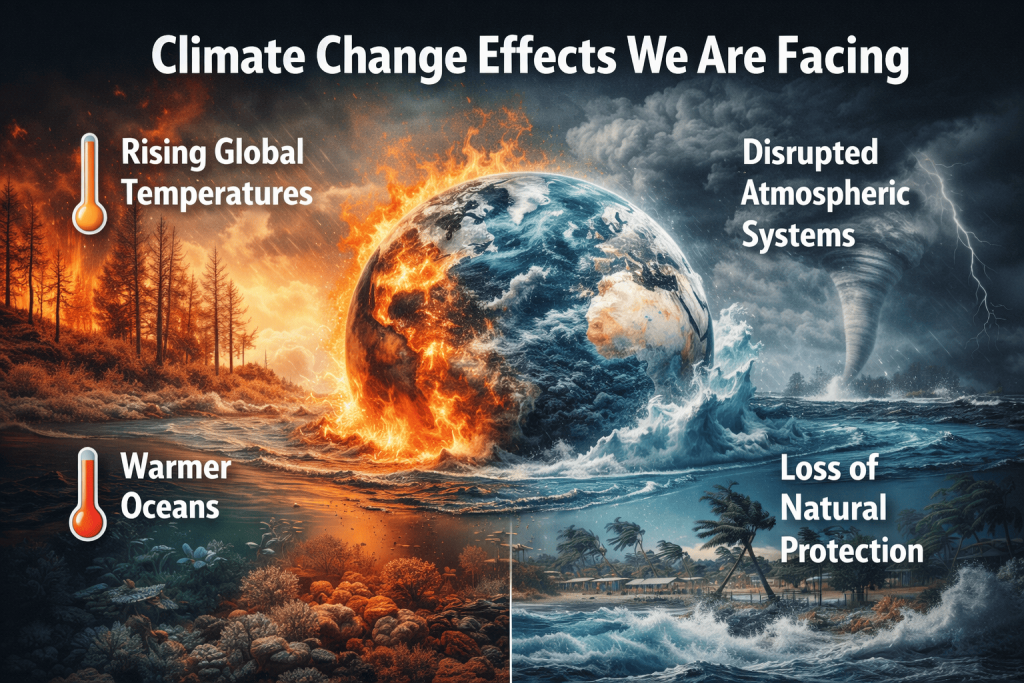
1. Rising Global Temperatures
As the planet warms, the atmosphere holds more moisture. This leads to heavier rainfall and flooding, while higher temperatures dry out land, increasing the risk of droughts and wildfires.
2. Disrupted Atmospheric Systems
Changes in jet streams and wind patterns cause weather systems to move more slowly. When storms linger over one area, they release more rain and cause greater damage.
3. Warmer Oceans
Oceans absorb most of the excess heat trapped in the atmosphere. Warmer ocean waters fuel stronger storms, intensify cyclones, and increase rainfall during extreme events.
4. Loss of Natural Protection
Deforestation, wetland destruction, and unchecked urban expansion reduce nature’s ability to absorb heat, manage water, and protect communities from severe weather.
Types of Extreme Weather Affecting the World
1. Heatwaves
Extended periods of extreme heat are becoming more common, leading to:
- Heat-related illnesses and deaths
- Increased energy demand
- Reduced agricultural productivity
2. Floods and Heavy Rainfall
Sudden and intense rainfall overwhelms drainage systems, causing:
- Damage to homes and infrastructure
- Displacement of communities
- Contamination of drinking water
3. Stronger Storms
Storms are gaining strength due to warmer air and oceans, resulting in:
- Higher wind speeds
- More rainfall
- Greater destruction in coastal regions
4. Droughts and Water Shortages
Long dry periods affect food production, drinking water supplies, and ecosystems, especially in already vulnerable regions.
Impact on People and Nature
1. Human Impact
- Loss of lives and livelihoods
- Rising food prices due to crop failures
- Mental health stress caused by repeated disasters
2. Environmental Impact
- Destruction of forests and wildlife habitats
- Soil erosion and land degradation
- Coral reef damage and marine ecosystem decline
Economic Consequences of Extreme Weather
Extreme weather events place a heavy financial burden on societies. Governments and businesses face increasing costs related to:
- Disaster response and recovery
- Infrastructure repair
- Insurance losses and rising premiums
Without preventive measures, these costs are expected to continue growing.
How the World Is Responding?
1. Improved Early Warning Systems
Better forecasting tools help communities prepare for extreme conditions before disasters strike.
2. Resilient Infrastructure
Cities are adapting by improving drainage systems, strengthening buildings, and redesigning urban spaces to cope with extreme heat and flooding.
3. Nature-Based Solutions
Restoring forests, wetlands, and coastal ecosystems helps reduce flooding, absorb heat, and protect biodiversity.
4. Global Cooperation
Countries are increasingly working together to reduce emissions and strengthen disaster preparedness strategies.
What Individuals Can Do?
While large-scale action is essential, individual efforts also play a role:
- Reduce energy use at home
- Support sustainable products
- Stay informed about local weather risks
- Advocate for environmental protection
Looking Ahead
Extreme weather events are reshaping how people live, work, and interact with the natural world. While these changes present serious challenges, informed action, preparedness, and sustainable choices can reduce future risks.
Understanding the causes behind extreme weather is the first step toward building a safer and more resilient planet.
FAQs
1. Why are extreme weather events increasing?
Long-term warming, environmental degradation, and human activities are intensifying weather systems worldwide.
2. Which regions are most affected by extreme weather?
Coastal areas, dry regions, and densely populated cities face the highest risks.
3. Can extreme weather be reduced?
While it cannot be eliminated entirely, its severity can be reduced through sustainable practices and environmental protection.
4. How does extreme weather affect food security?
Floods, droughts, and heatwaves damage crops, disrupt supply chains, and increase food prices.
Read More blogs:-
The Climate Crisis Explained: Causes, Impacts, and What 2026 Tells Us
Climate Change and Human Health: Why the Crisis Is Becoming a Global Emergency in 2026