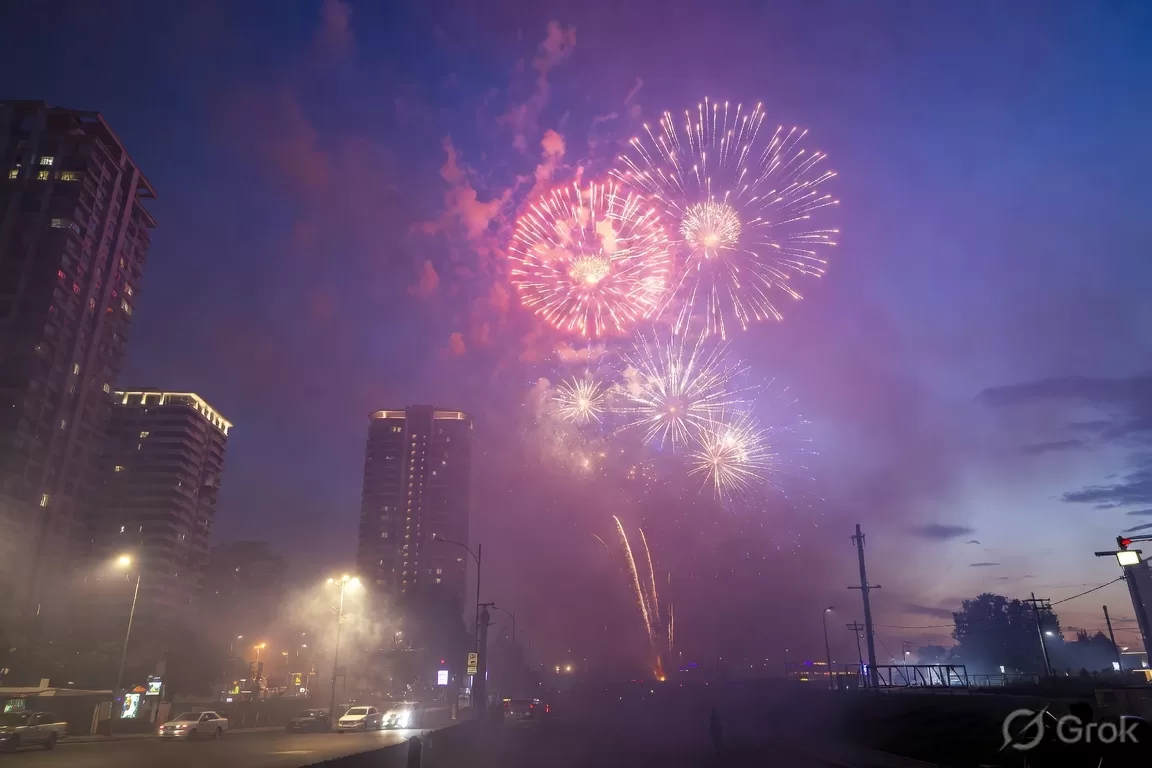
For a few hours this month, Washington DC had some of the worst air on the planet — worse than most major global cities. The culprit wasn’t a factory or a wildfire; it was a record-breaking fireworks show layered on top of an oppressive heat dome. It’s a striking case study in how fireworks air pollution can spike air quality index (AQI) readings into hazardous territory almost overnight.
What Happened in the Capital
Residents of Washington, DC briefly experienced the worst air quality of any major city in the world on Sunday, according to IQAir, as the capital dealt with the aftermath of a massive, 40-minute Fourth of July fireworks show. A “purple” air quality alert was issued for the nation’s capital and parts of northern Virginia, corresponding to “very unhealthy” air conditions. DC ranked sixth among the world’s most polluted cities that day, trailing only Lahore, Kinshasa, Jakarta, Jerusalem, and Tel Aviv. CNN + 2
The Science Behind the Spike
Fireworks release fine particulate matter (PM2.5) directly into the air, and this year’s celebration was unusually large. Researchers found around a 42% increase in these small pollutants in the hours after a fireworks show, and this pollutant is typically compounded by ground-level ozone, formed when vehicle exhaust chemicals bake under strong ultraviolet rays on hot days. Monitoring data backed this up: the air quality index at DC’s McMillan Reservoir reached 157 by mid-morning, while the King Greenleaf Recreation Center peaked at 288 — both firmly in “unhealthy” to “hazardous” territory.
- PM2.5 particles are roughly 30 times smaller than a human hair and lodge deep in the lungs
- Metal-based fireworks colorants add heavy-metal particulates to the mix
- Heat and stagnant air trap pollutants closer to the ground for longer
Who’s Most at Risk
Health officials specifically flagged pregnant people, those with pre-existing conditions like asthma, and anyone with young children or older adults nearby as needing to limit outdoor exposure. Internal National Park Service modeling had predicted this outcome in advance, warning of hazardous pollution around the Mall and “very unhealthy” conditions across central DC before the event even took place. The Washington Post
Solutions and What You Can Do
Cities can reduce this risk by shifting toward laser and drone light shows, staggering large-scale pyrotechnic events away from heat advisories, and issuing real-time AQI alerts through apps and text systems. On an individual level, checking a live AQI map before heading outdoors, wearing an N95 mask during smoke-heavy hours, and keeping windows closed with air purifiers running are simple, effective precautions.
Key Takeaways
DC’s Code Purple alert is a clear example of how fireworks air pollution and extreme heat can combine to create acute, short-term public health emergencies — even in cities with generally strong air quality records. As celebrations get bigger, cities will need to weigh the tradition against the very real respiratory risks.
Leave a Reply