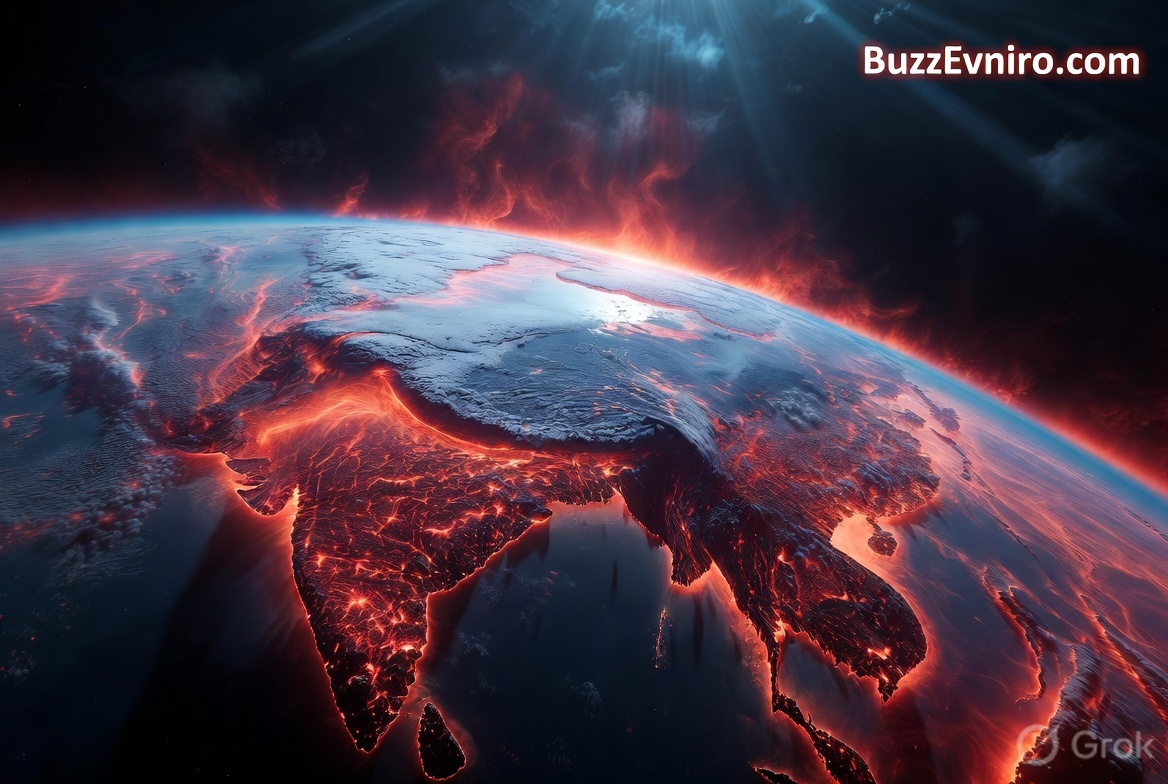
The United Nations and World Meteorological Organization (WMO) have issued a stark warning: Earth’s energy imbalance has reached unprecedented levels, with the planet absorbing significantly more heat than it releases into space. The last 11 years (2015–2025) are now confirmed as the warmest on record, signaling that the global climate system is more unstable than at any point in human history.
What is Earth’s Energy Imbalance? This imbalance occurs when greenhouse gases trap more heat in the atmosphere, causing the planet to retain excess energy. Most of this heat is absorbed by the oceans (over 90%), leading to marine heatwaves, rising sea levels, and disrupted weather patterns. The current imbalance is estimated to be roughly double what it was in the early 2000s.
Key Findings from Latest Reports
- Global average temperature continues its upward trajectory.
- Ocean heat content reached new record highs in 2025.
- Ice sheet melting in Greenland and Antarctica is accelerating.
- Extreme weather events are becoming more frequent and intense even without strong natural variability like El Niño.
Why This Matters An increasing energy imbalance means the climate is locked into further warming for decades, even if emissions were to stop tomorrow. This creates a “committed warming” effect that will continue to drive sea-level rise, biodiversity loss, and ecosystem collapse.
Regional Impacts Already Visible
- South Asia & Middle East: Record-breaking heatwaves have become the new normal.
- Europe & North America: More frequent and deadly heat domes.
- Small Island Nations: Accelerated coastal erosion and existential threats from rising seas.
- Polar Regions: Rapid ice loss contributing to global ocean circulation changes.
International Response The UN is calling for urgent, scaled-up action on both mitigation (rapid emissions cuts) and adaptation (building resilience). Scientists emphasize that every fraction of a degree of additional warming makes adaptation significantly harder and more expensive.
The Road Ahead While the news is concerning, it also reinforces the importance of current efforts — renewable energy expansion, forest protection, and nature-based solutions. The record imbalance is not just a warning; it is a clear call for humanity to treat the climate crisis with the urgency it demands.
This report serves as a critical scientific backdrop as nations prepare for future climate negotiations and domestic policy reviews.