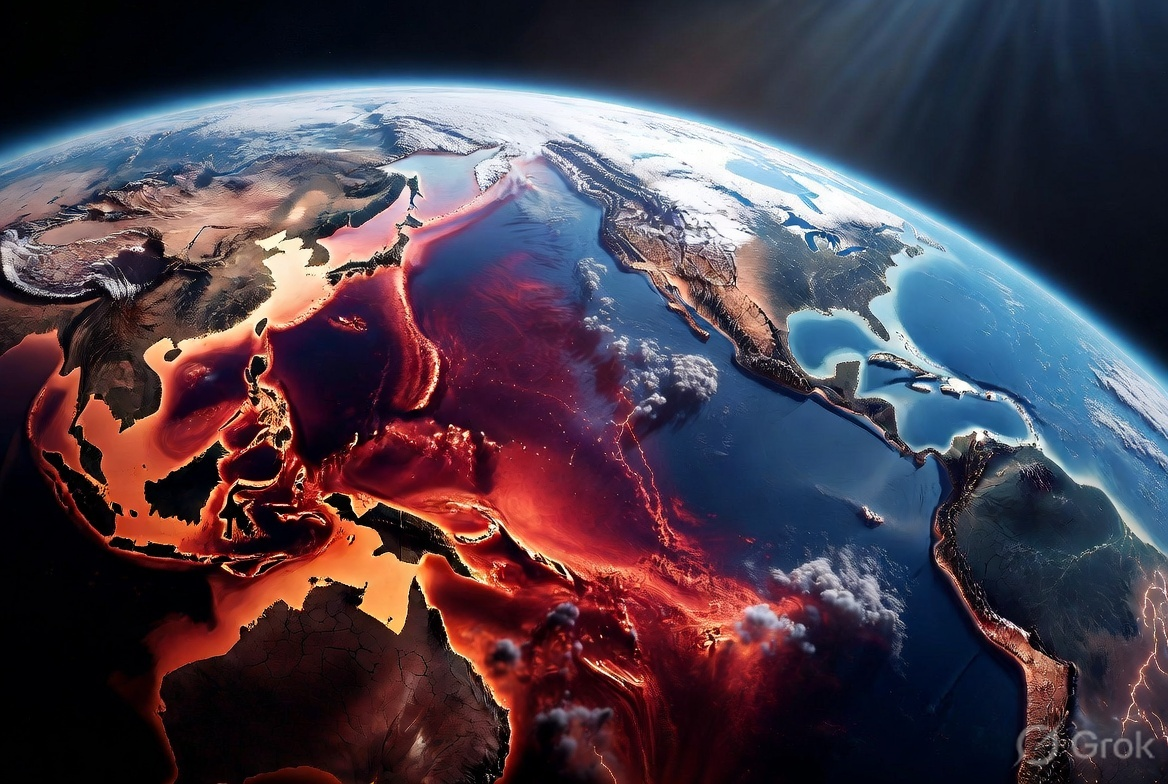
The world is on high alert as forecasters warn of a potentially “super” El Niño developing rapidly in 2026. According to the latest update from the US National Oceanic and Atmospheric Administration (NOAA) on 14 May 2026, there is an 82% chance of El Niño emerging between May and July, with a 96% chance it will persist through the Northern Hemisphere winter 2026–27.
What Makes This El Niño Different? While the probability of formation is now very high, the real concern is its potential intensity. NOAA estimates a roughly one-in-three (37%) chance of a “very strong” event, with some models from the European Centre for Medium-Range Weather Forecasts (ECMWF) suggesting sea surface temperatures could rise more than 2.5–3°C above average. Such events are rare — only four “super” El Niños have occurred since 1950.
This would build on an already warming planet, potentially pushing global temperatures toward 1.7°C above pre-industrial levels temporarily and making 2026 or 2027 the hottest year on record.
Global Weather Impacts Expected
- Asia & Australia: Severe droughts, reduced monsoon rainfall (especially in India and Southeast Asia), and wildfire risks.
- South America: Heavy flooding in Peru, Ecuador, and parts of the Amazon.
- United States: Wetter and cooler conditions in the southern states, possible impacts on Atlantic hurricane season.
- Africa & Horn of Africa: Mixed signals with flood risks in some areas and drought elsewhere.
- Global Food Systems: Higher chances of crop failures, food price spikes, and supply disruptions.
Why It Matters Now El Niño events act as “climate multipliers.” Combined with long-term human-caused warming, they amplify extremes. Scientists note substantial uncertainty in peak strength due to the spring predictability barrier, but ocean-atmosphere coupling is already strengthening.
Human and Economic Costs Past strong El Niños (1997–98 and 2015–16) caused billions in damages, thousands of deaths, and major ecosystem disruptions. A 2026 super event could hit vulnerable communities hardest — small island nations, tropical agriculture, and low-income regions.
Preparation and Adaptation Governments and organizations are ramping up early warning systems. Farmers are being advised to switch to drought-resistant crops, while insurers and humanitarian agencies prepare for multi-region crises. For the energy sector, altered rainfall patterns could affect hydropower and increase cooling demand.
A Wake-Up Call This looming El Niño underscores the urgency of both mitigation (cutting emissions) and adaptation (building resilience). While natural variability drives El Niño, climate change makes its impacts more severe.
The next few months will be critical as scientists monitor Pacific conditions. Stay prepared — the planet’s climate system is sending a strong signal.